
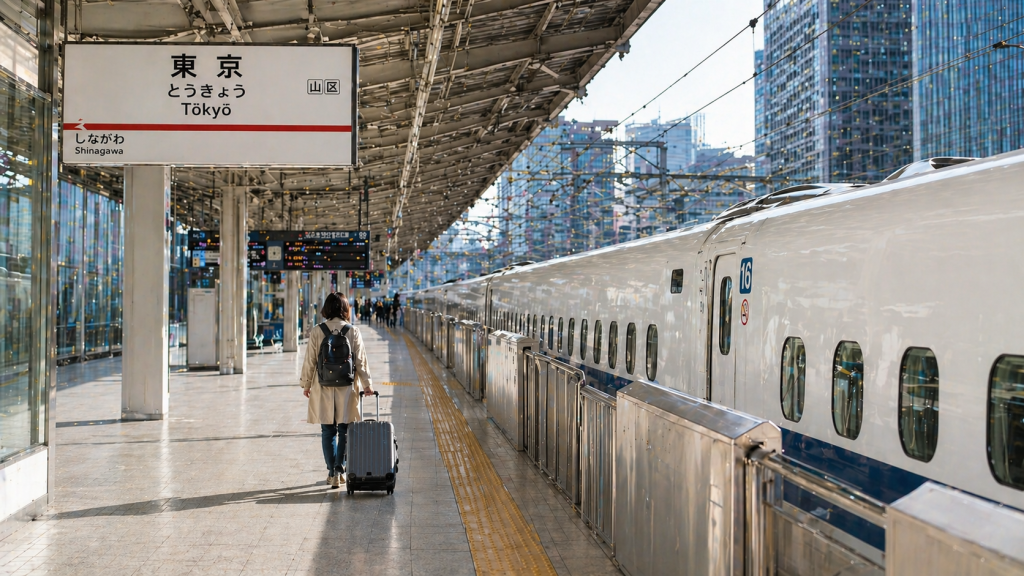
For Muslim travelers planning a trip to Japan 💫
These Japan travel tips will help Muslim travelers feel right at home—covering everything from transport to daily life in this safe, well-organized country.
This guide walks you through the essentials of getting around, paying, and everyday life in Japan—through the lens of a Muslim traveler.
1. Knowing the Basics Makes Japan Travel Surprisingly Smooth ✈️
Japan is often described as one of the easiest countries to travel in—but for first-time visitors, questions like these often come up:
- How do I use the trains? 🚆
- Do I need to carry cash? 💴
- Where can I use my card? 💳
- How am I supposed to act in public spaces?
These are completely natural things to wonder about.
For Muslim travelers especially, food and prayer naturally take priority—so it helps to keep transportation and payment as simple as possible from the start.
2. Getting Around Japan: Why an IC Card Is a Game-Changer 🚆💳

If you’re planning to use trains or buses in Japan, the first thing to know about is the IC card.
Why an IC Card Is So Convenient
- No more buying tickets every single time 🎫
- Trains, subways, and buses become seamless
- Often usable for small purchases at convenience stores 🏪
Especially in Tokyo and the Kansai region, where you’ll be moving around constantly, a single IC card transforms the entire travel experience.
A Recommended IC Card for Travelers
- Welcome Suica
A traveler-friendly IC card valid for 28 days from the date of purchase.
Helpful Things to Know About Public Transport
- Many stations have English signage, so navigation isn’t too tricky 🌍
- Buses accept cash, but tapping with an IC card is much smoother
3. Cashless Is Convenient—But a Little Cash Still Comes in Handy 💳💴
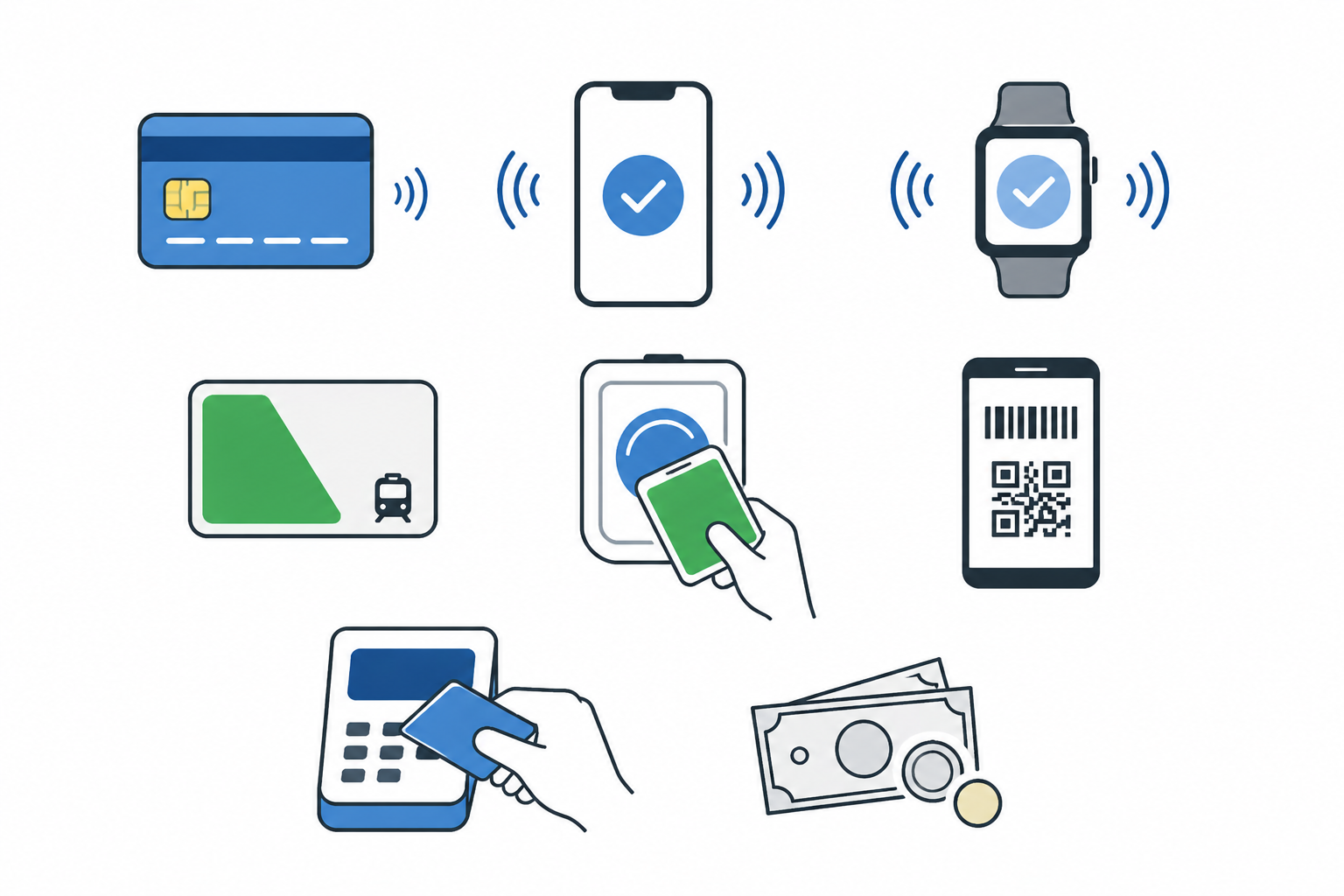
Cashless payment is widespread in Japan, but cash still has its moments where it really helps.
The Best Approach to Payments 💡
- Go cashless as your default
- Keep a little cash on hand just in case
This combination is the most balanced and stress-free.
Commonly Accepted Payment Methods 💡
- Credit cards 💳
- Debit cards
- Transit IC cards
- Some mobile payment apps 📱
QR Payment Apps from Home Often Work in Japan Too 📱
Japan now has over 1.5 million stores that accept Alipay+, which means you can often use the QR payment app you already use at home—right here in Japan.
If you spot a “PayPay” or “Alipay+” QR code at the register, your familiar app may work seamlessly. Supported apps include:
- Touch ‘n Go eWallet (Malaysia) 🇲🇾
- DANA (Indonesia) 🇮🇩
- GCash (Philippines) 🇵🇭
- TrueMoney (Thailand) 🇹🇭
- Alipay / WeChat Pay (China) 🇨🇳
- Kakao Pay (Korea) 🇰🇷
You’ll find Alipay+ supported at convenience stores, popular tourist shops, drugstores, and electronics retailers.
Before your trip, check whether your home app supports Alipay+—it makes paying in Japan much smoother 💡
Why Carrying Some Cash Still Helps
- Smaller shops sometimes don’t accept cards
- Ticket vending machines may require cash
- Cash is handy at street food stalls and local spots
👉 The combination of cashless as default + a little cash in your wallet is the lightest, easiest way to travel through Japan.
4. Everyday Life in Japan: Helpful Things to Know 🏙️
Daily life in Japan can feel a bit different at first, but a few small tips go a long way toward making it feel familiar.
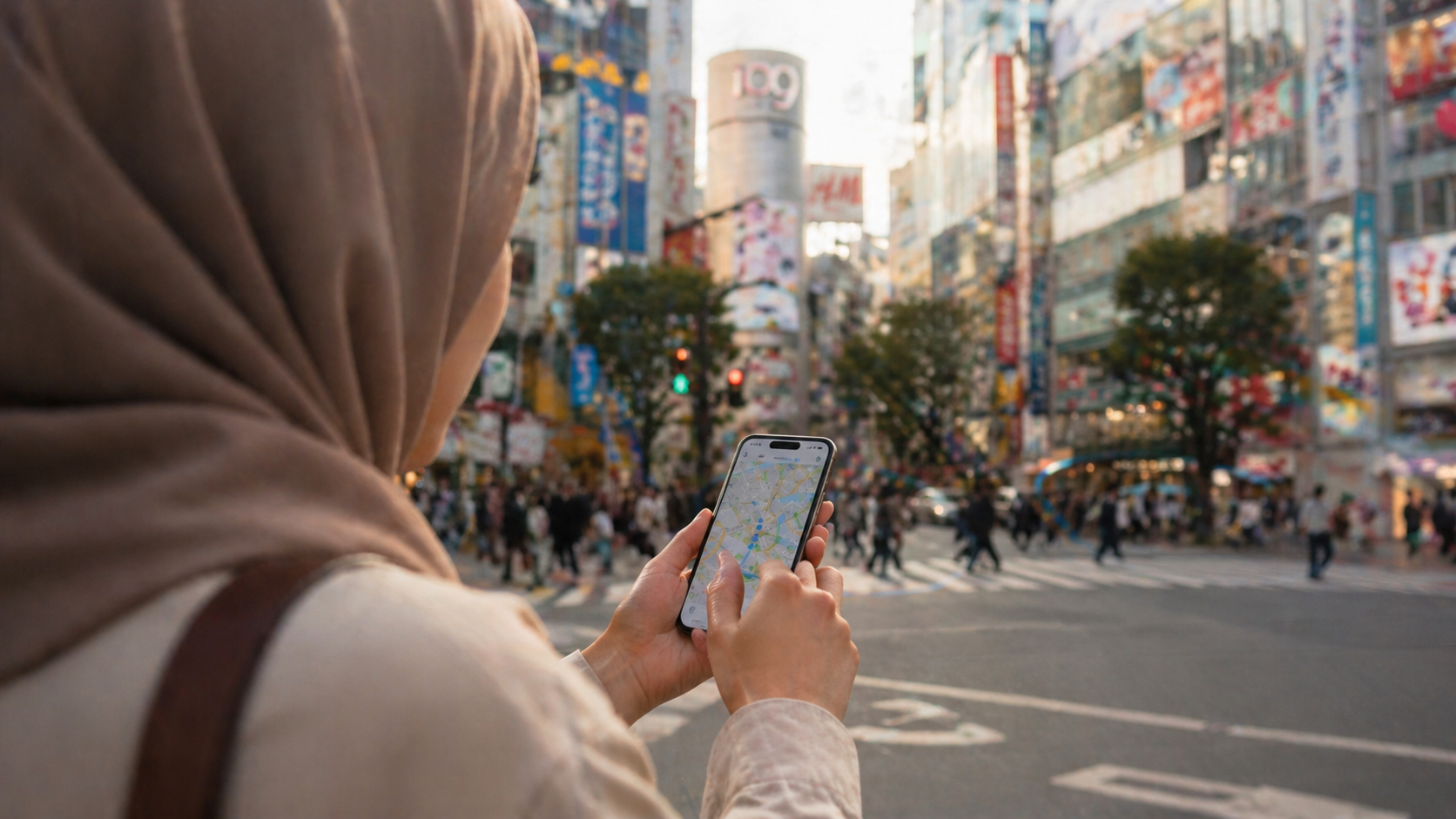
Knowing the basics makes daily life in Japan feel much more comfortable
🔇 Trains tend to be quiet
On Japanese trains, people generally keep their voices low, creating a calm and relaxed atmosphere.
🗑️ Public trash bins can be hard to find
You’ll notice trash bins are scarce on the streets, so you may need to carry rubbish for a while. A small bag in your pocket is a real lifesaver 👜
💧 Drinks are easy to find
Convenience stores and vending machines are everywhere, so grabbing a drink whenever you need one is no problem at all.
🌍 English varies by location
Tourist areas tend to handle English well, but smaller shops can be hit or miss. Translation apps and maps quickly become your best friends 📱
5. What Muslim Travelers Should Keep in Mind 🕌🍽️

A little planning beforehand makes traveling through Japan so much more enjoyable
🗺️ Plan meals around your sightseeing area for the day
Grouping sightseeing and meals in the same area cuts down on travel time significantly.
For detailed area-by-area info on Tokyo, Japan’s capital, check out this article.
🕌 Build prayer times into your daily plan
Prayer spaces aren’t available everywhere, so it’s a good idea to build prayer times into your daily flow ahead of time.
📍 Google Maps and Tripadvisor are super helpful
Just glancing at reviews, photos, and access info ahead of time gives you a real boost in confidence on the day.
🍽️ Have a few “go-to” restaurants in mind
In a city like Tokyo, where the sightseeing areas are clearly defined, knowing a handful of restaurants with clear halal information makes a huge difference. Having a few options—ramen, wagyu, burgers, whatever fits your mood—turns mealtime into something you look forward to ✨
6. Wrapping Up 🌸
Just knowing the basics—getting around, paying, and navigating daily life—makes traveling through Japan dramatically smoother.
The four key takeaways:
- Use an IC card for transportation 🚆
- Cashless as default + a little cash 💳💴
- Plan sightseeing, meals, and prayer by area 🗺️
- Make use of traveler-friendly tools 📱
That’s really all you need.
Japan can feel a bit puzzling at first, but once you’ve got the basics down, it becomes one of the most rewarding countries you can explore.
