

Why Dining in Japan Feels Easier Than You’d Expect
Walking into a Japanese restaurant for the first time can feel a little intimidating. Maybe you’ve wondered:
• How do I get the staff’s attention?
• How does ordering even work here?
• Do I pay at the table or at the register?
Good news: Japanese restaurants are actually surprisingly simple once you know the rhythm. You don’t need to speak Japanese — just knowing what to expect makes everything smoother. In this guide, we’ll walk you through the whole journey, from stepping inside to walking out happy, with handy phrases and scene-by-scene tips along the way 😊
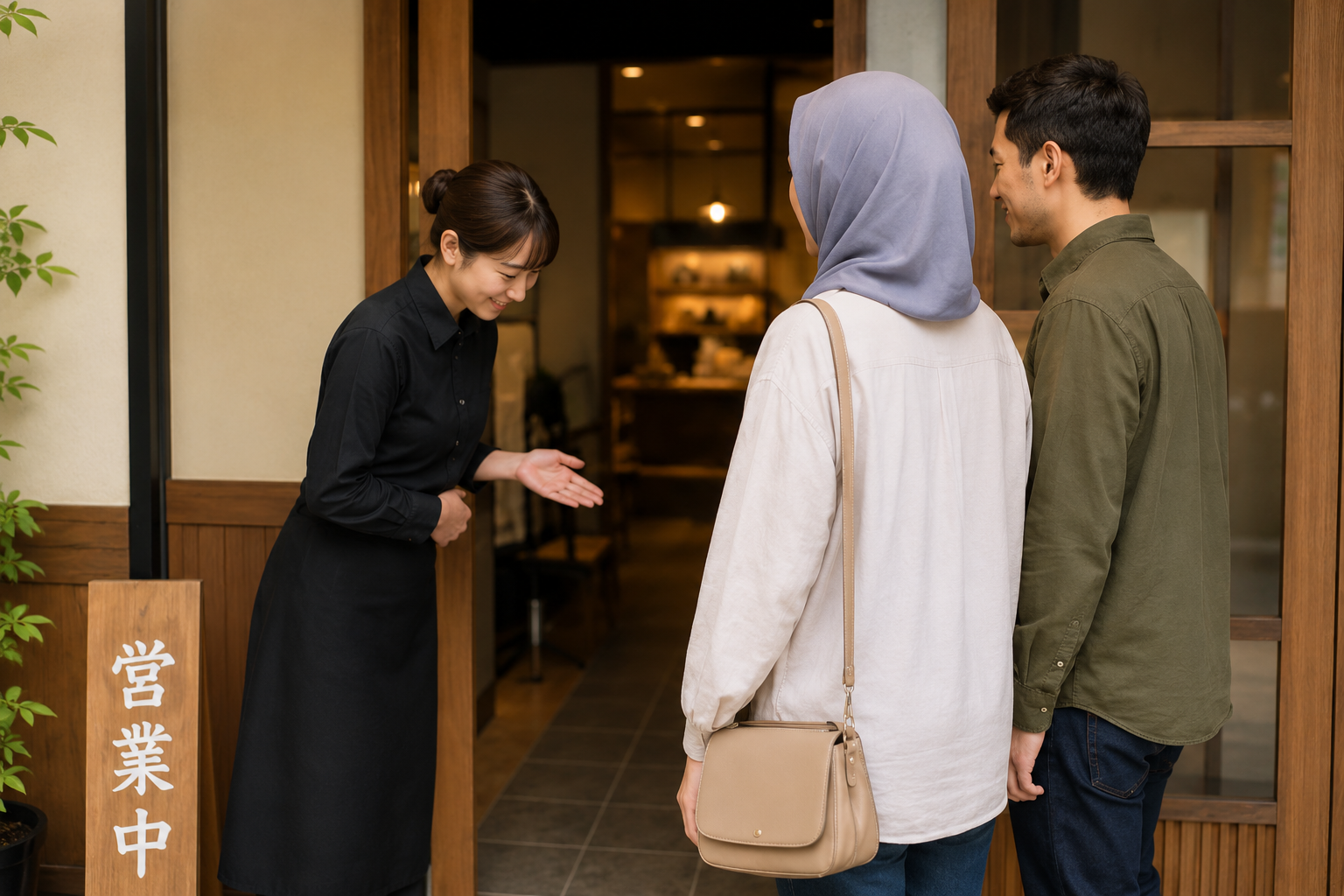
Walking Into a Restaurant: The Basics 🚪
In most Japanese restaurants, the routine is to wait at the entrance to be seated. Even if you spot empty tables, don’t head straight for them — pause near the door, and a staff member will come greet you.
When they arrive, they’ll usually ask you a few quick things:
You really don’t need any Japanese. Holding up fingers, or saying “Two please,” is enough. Staff are used to international guests and very patient — relax and walk in confidently.
4 Ordering Styles You’ll Encounter 📋
Here’s what trips up most first-timers: there isn’t just one way to order in Japan. There are roughly four styles, so the trick is to glance around when you sit down and figure out which one applies.

The classic, most intuitive style. Decide what you want, then either catch a server’s eye or press the call button on your table.
Common at family restaurants and chain spots. There’s a tablet on your table — browse the menu and tap to order from your seat.
Increasingly popular. Scan the QR code on your table with your phone and order through the browser — no app download needed.
A favorite at ramen shops and casual eateries. You buy a paper ticket from a vending machine at the entrance, then hand it to staff at your seat.
Is there a tablet? A small card with a QR code? A call button near the edge of the table? Was there a ticket machine by the entrance? Spot any one of these and you’ve identified the system.
Handy Phrases You Can Actually Use 💬
Screenshot this section and you’ve got a pocket phrasebook for the trip. Don’t worry about perfect pronunciation — staff will understand, and a smile + pointing works wonders.
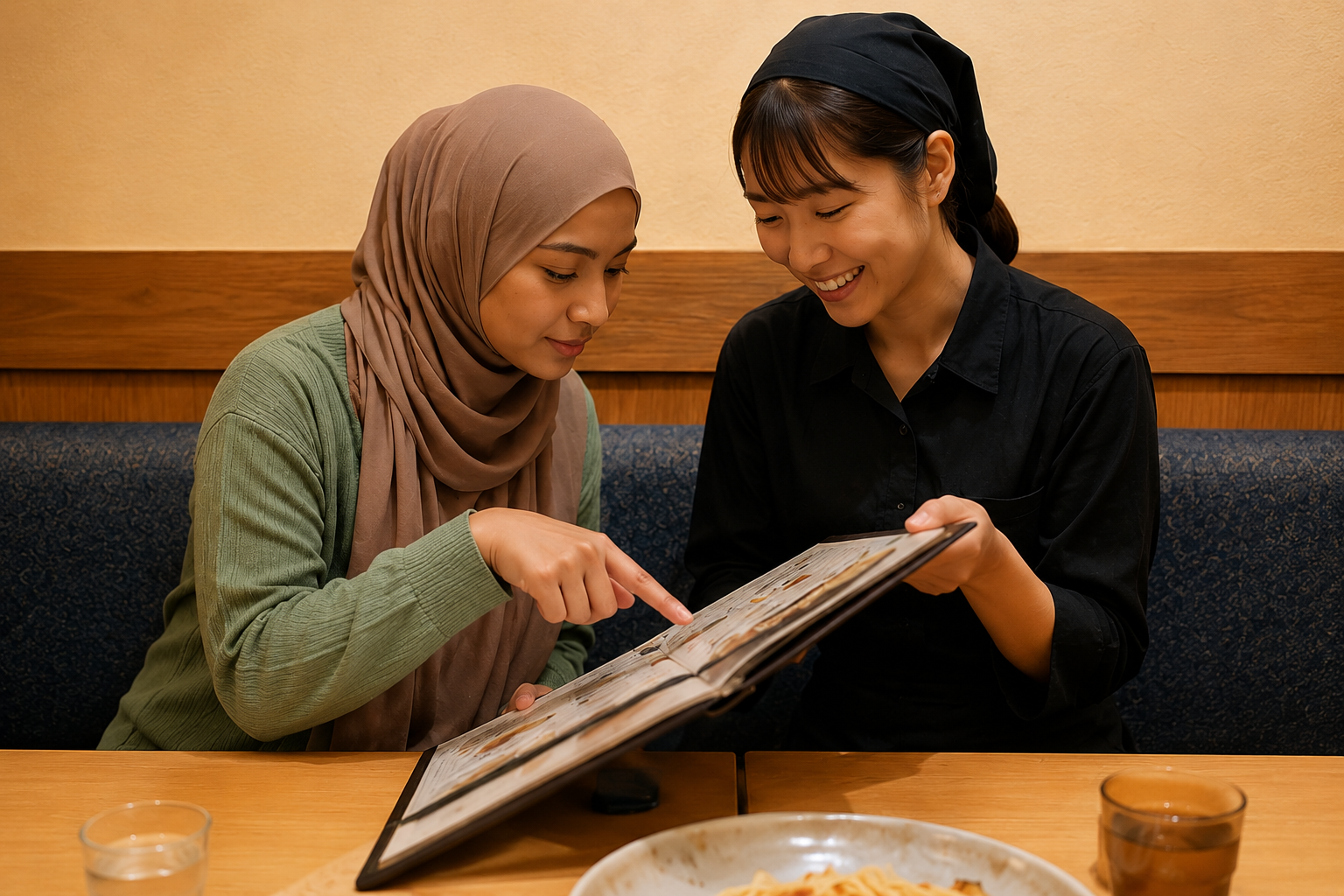
◆ Arriving & Being Seated
◆ When Ordering
◆ Halal & Ingredient Check ⭐
◆ Paying & Leaving
Dining Etiquette (Relax — You’re Fine) 🍴
Japanese dining etiquette isn’t a strict test you need to pass. Just keep these basics in mind and you’ll feel right at home.
Japanese restaurants tend to have a calm atmosphere. Of course you can enjoy a conversation — just keep the volume gentle and you’ll fit right in.
No need to shout. A soft “Sumimasen!” when staff pass by, or pressing the call button, gets attention naturally.
Photographing your meal is totally normal in Japan. Just skip the flash and try not to capture other diners or staff in the background.
Japan has no tipping culture. Just pay the bill amount — that’s it. Many travelers find this surprising at first.
Especially during lunch hour, it’s polite to head out within a reasonable time after finishing your meal — make space for the next guest.
① Never stand chopsticks upright in your rice. ② Never pass food chopstick-to-chopstick. Both are associated with funeral rituals. Everything else? Totally relaxed.
How to Pay the Bill 💴
This is where many travelers get confused. In Japan, you usually pay at a register near the entrance, not at your table. So instead of waiting for the bill to be brought to you, you walk over to the counter with your slip.
Upscale or course-menu restaurants sometimes handle payment at the table, but casual spots almost always use the register.
💳 Common Payment Methods
※ Smaller, family-run places may be cash-only. Keep some yen on hand just in case.
Scene by Scene: Different Restaurant Types 🏯
The vibe and the routine shift a bit depending on the type of restaurant. Here are four of the most common ones you’ll encounter.
Ramen Shops
Mostly ticket-machine style. Important: most ramen uses tonkotsu (pork bone) broth, which is not halal. Halal ramen shops are rare, so it’s smart to look ahead on apps like “Halal Gourmet Japan.” Chicken-based (torigara) and seafood-based ramen shops are also growing in number.
Sushi Restaurants (including conveyor belt)
Built on fish and rice, so generally easier to navigate. Most use tablet ordering. Important: soy sauce may contain trace alcohol, and sushi vinegar sometimes contains mirin (a sweet rice wine). Asking “Do you have alcohol-free soy sauce?” is a good move.
Family Restaurants (Famiresu)
Beginner-friendly: English menus, tablet ordering, lots of options. Salads, fish dishes, and udon are popular. Watch out: sauces can contain Western liquor or mirin. Simple grilled-fish set meals and plain udon are among the safer picks.
Izakaya (Japanese Gastropubs)
Important: izakaya are built around drinking, so alcohol is woven into many dishes too. If you want the cultural experience, look for halal-certified, alcohol-free izakaya in advance — there are more of these popping up in Tokyo and Osaka than you’d think.
What Muslim Travelers Should Keep in Mind 🤲
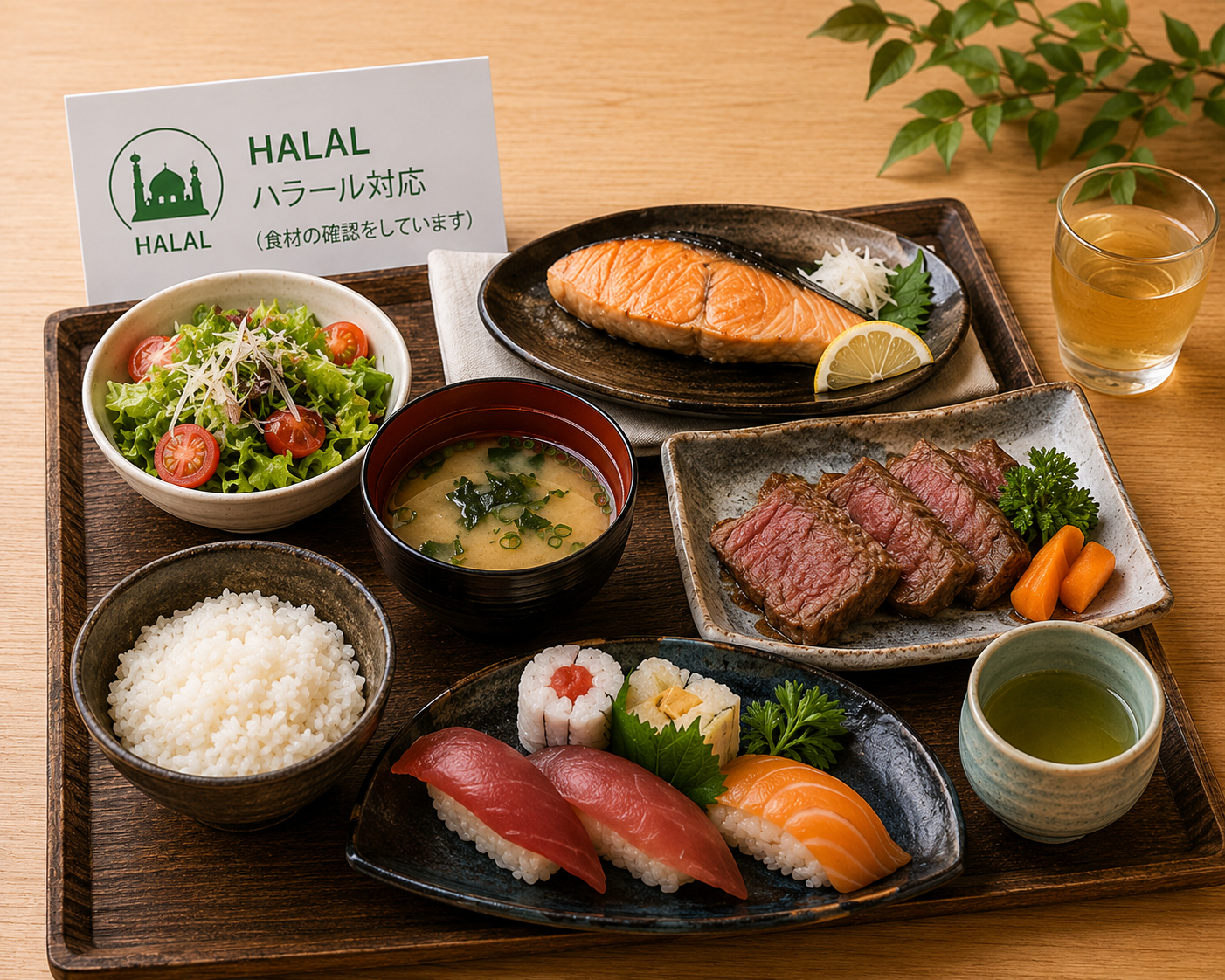
1. Don’t hesitate to ask
No need to worry about “being a bother.” With Japan’s growing international tourism, staff are increasingly used to helping visitors with dietary questions. Simple English plus pointing is more than enough.
2. Even simple-looking dishes can hide tricky seasonings
Japanese food often looks minimal, but the sauce, marinade, broth, or simmering liquid can contain mirin, cooking sake, or pork-based extracts. The trick: always ask about the sauce or broth ingredients separately.
3. Choose restaurants that explain things clearly
Restaurants that openly explain what’s halal and what isn’t are far less stressful to dine at. Check halal-friendly travel apps in advance to scout out certified spots.
4. Plan meals and prayer together
Sightseeing days involve a lot of walking. Planning meals and prayer spaces around the same area saves a ton of energy. More major stations now feature buildings with prayer rooms.
FAQ — Quick Answers ❓
What if the staff doesn’t speak English?
Google Translate’s “Camera” feature instantly translates menus — download it before your trip. A combination of pointing and a friendly smile gets you surprisingly far.
Do I need reservations?
Reservations are recommended for popular spots and dinner hours, but most restaurants welcome walk-ins. For halal-certified spots, booking ahead is the safer bet since options are limited.
Are restaurants child-friendly?
Family restaurants and conveyor-belt sushi spots actively welcome kids — many have high chairs and kids’ menus. Upscale or izakaya-style places are more grown-up environments.
Are vegetarian menus available?
They’re growing, but still uncommon. Note: even “vegetarian” Japanese dishes often contain dashi (fish-based broth), so always double-check the ingredients.
What if I order the wrong thing?
If the food hasn’t arrived yet, just let staff know — “Sorry, can I change this?” works fine. Changes are harder once the food is served, so confirm at the time of ordering when in doubt.
Key Takeaways ✨
Meals are often the most memorable moments of a trip. Once you’ve got the flow and a few phrases ready, the nerves fade and the fun takes over. Relax, enjoy, and savor every bite of Japan’s incredible food culture 🍽️
