

Few things capture the spirit of Japan quite like matcha — that vivid green tea served as a frothy latte, layered into a parfait, paired with a delicate sweet, or whisked by hand in a quiet tea room.
But if you keep halal, one question usually comes up first: can I actually enjoy matcha and Japanese sweets here?
The short answer is yes. Matcha itself is halal, and Muslim travellers can enjoy it freely. What you need to watch for is usually what comes with it — the sweets, the toppings, the flavourings.
Here’s a relaxed, practical guide to enjoying matcha across cafés, wagashi (Japanese sweets), and the tea ceremony — plus exactly what to check before you order.
Is matcha itself halal?
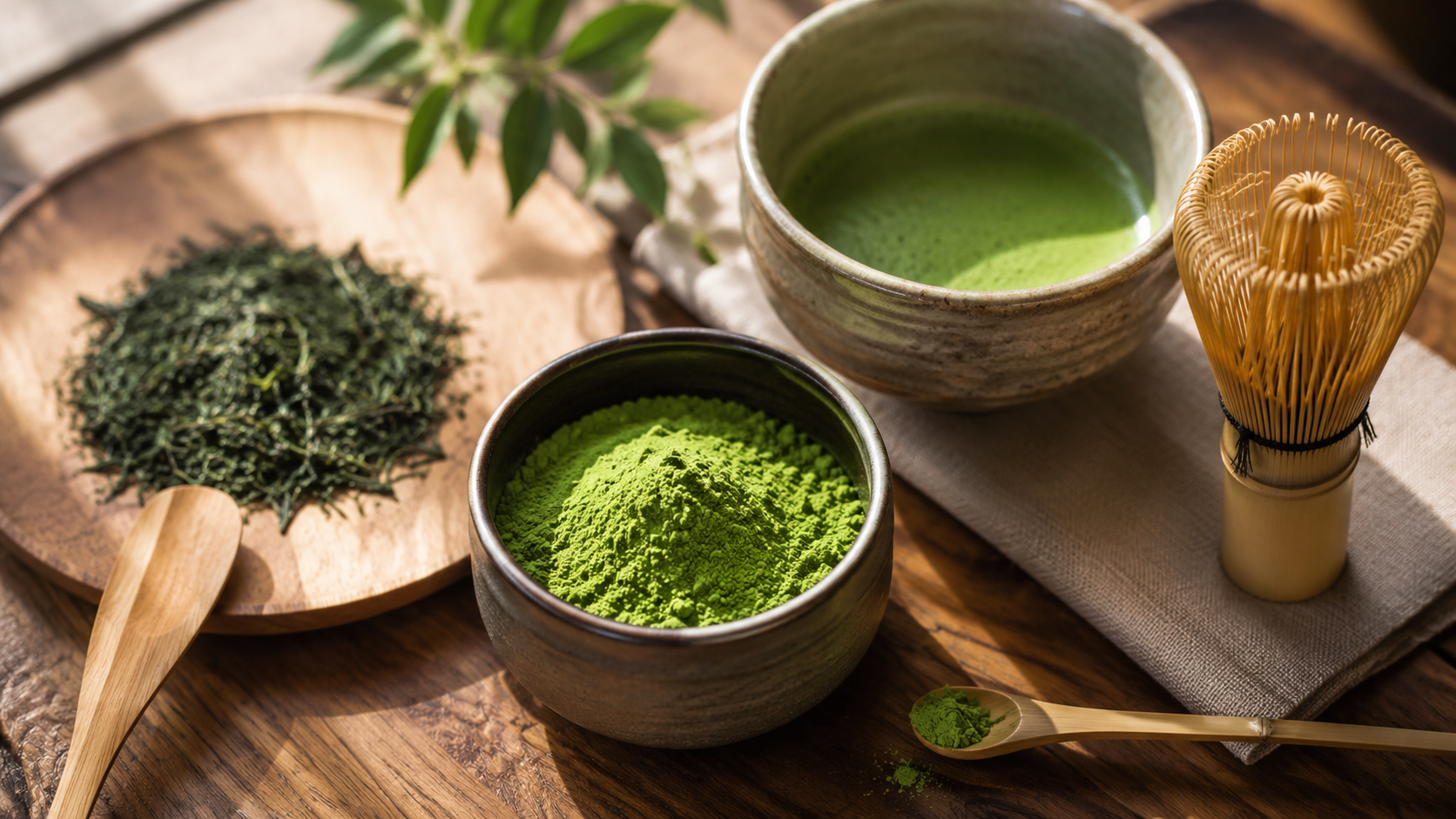
Matcha is simply shade-grown tea leaves that are steamed, dried, and stone-ground into a fine powder. It’s nothing but leaves — no pork, no alcohol, no animal-derived ingredients.
So pure matcha whisked with hot water is halal by default. You’ll even find halal-certified matcha from a growing number of Japanese tea makers.
The catch is never the matcha — it’s what gets mixed into it or made from it. Once you know those, you’re free to enjoy.
6 things to check with matcha & Japanese sweets
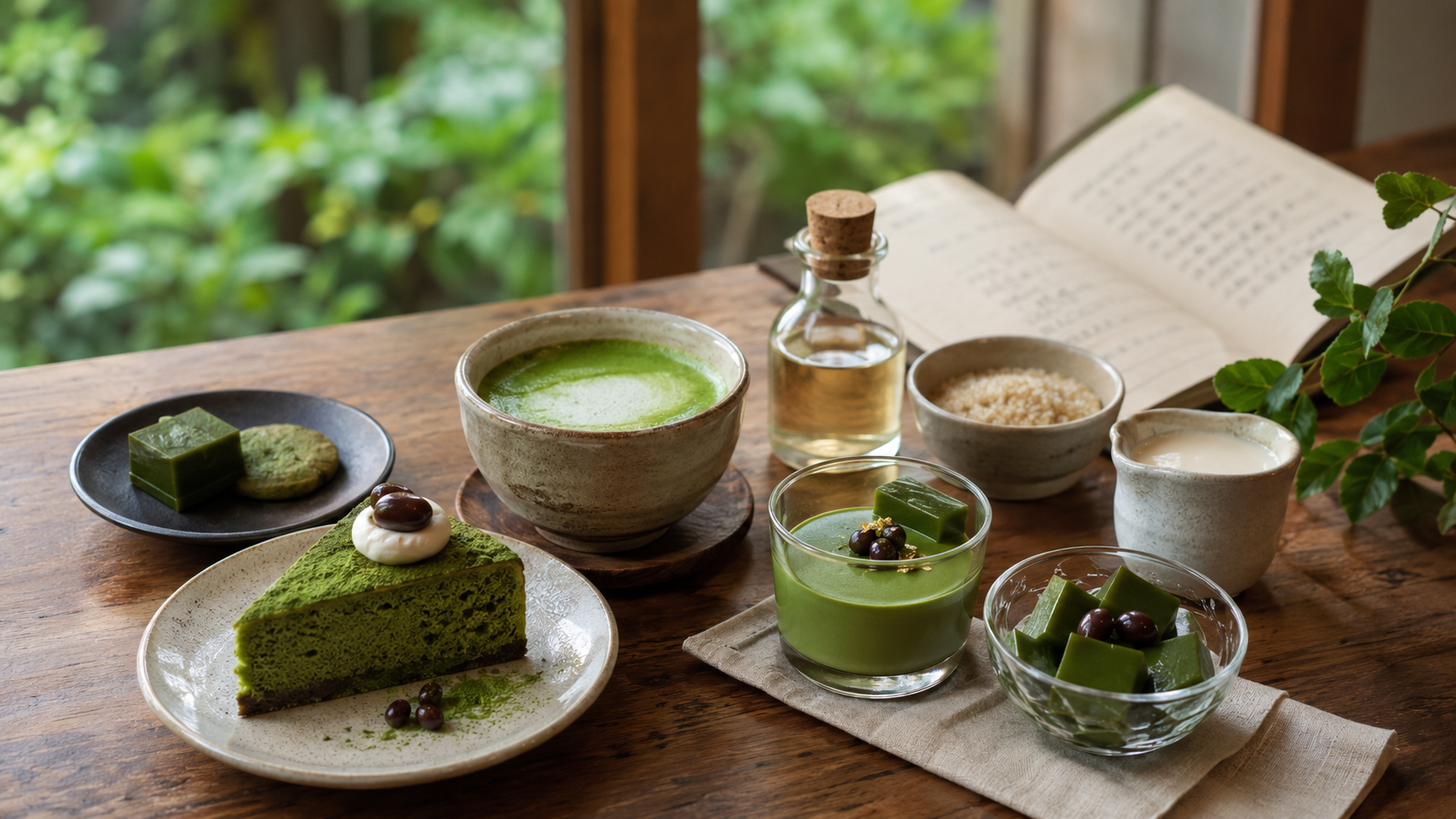
Japanese sweets can hide ingredients you’d never guess from looking at them. Keep these six in mind.
1. Alcohol (sake, mirin, liqueurs, flavourings)
Alcohol is haram, and it hides in more than just drinks:
- Mirin & cooking sake — sometimes used to flavour sweets or red-bean paste.
- Liqueurs (rum and the like) — often scent western-style matcha cakes, tiramisu, and mousse.
- Vanilla essence & flavourings — frequently use alcohol as a base.
- Baked goods in general — even a matcha cookie or cake may carry alcohol from its flavouring.
Some Muslims avoid even a trace; others don’t mind a small amount that cooks off. How strict to be is personal — go by your own standard.
2. Animal gelatin (jelly, mousse, marshmallow)
Gelatin is often pork-derived, so it deserves extra attention.
- Look out for it in matcha jelly, mousse, pudding, and marshmallows.
- The good news: traditional kanten (agar) is seaweed-based and halal. Most yokan and mitsumame use it — but some products swap in gelatin, so it’s worth a check.
3. Animal emulsifiers, shortening & margarine
Plant-based versions are fine, but these can also be animal-derived (often pork) — and the label rarely tells you which. The more processed and western the sweet, the more worth asking.
4. Animal extracts & lard
Some cookie- or snack-style matcha treats use meat extract or lard (pork fat). Both are haram.
5. Cross-contamination
Even halal ingredients can be a concern if they’re prepared with tools or in a kitchen that also handles pork or alcohol. If you observe strictly, it’s fair to ask about how things are prepared, too.
6. “Halal certified” vs. “Muslim friendly”
In Japan you’ll mainly see two levels of accommodation:
- Halal certified — audited and marked by a third-party body. The most reliable.
- Muslim friendly — the shop voluntarily avoids pork and alcohol and shares ingredient info. Helpful, but less strict.
Neither is “better.” It comes down to how strictly you observe — certified for the strictest, Muslim-friendly when you’re a little more flexible.
Enjoying matcha, scene by scene
☕ At a café
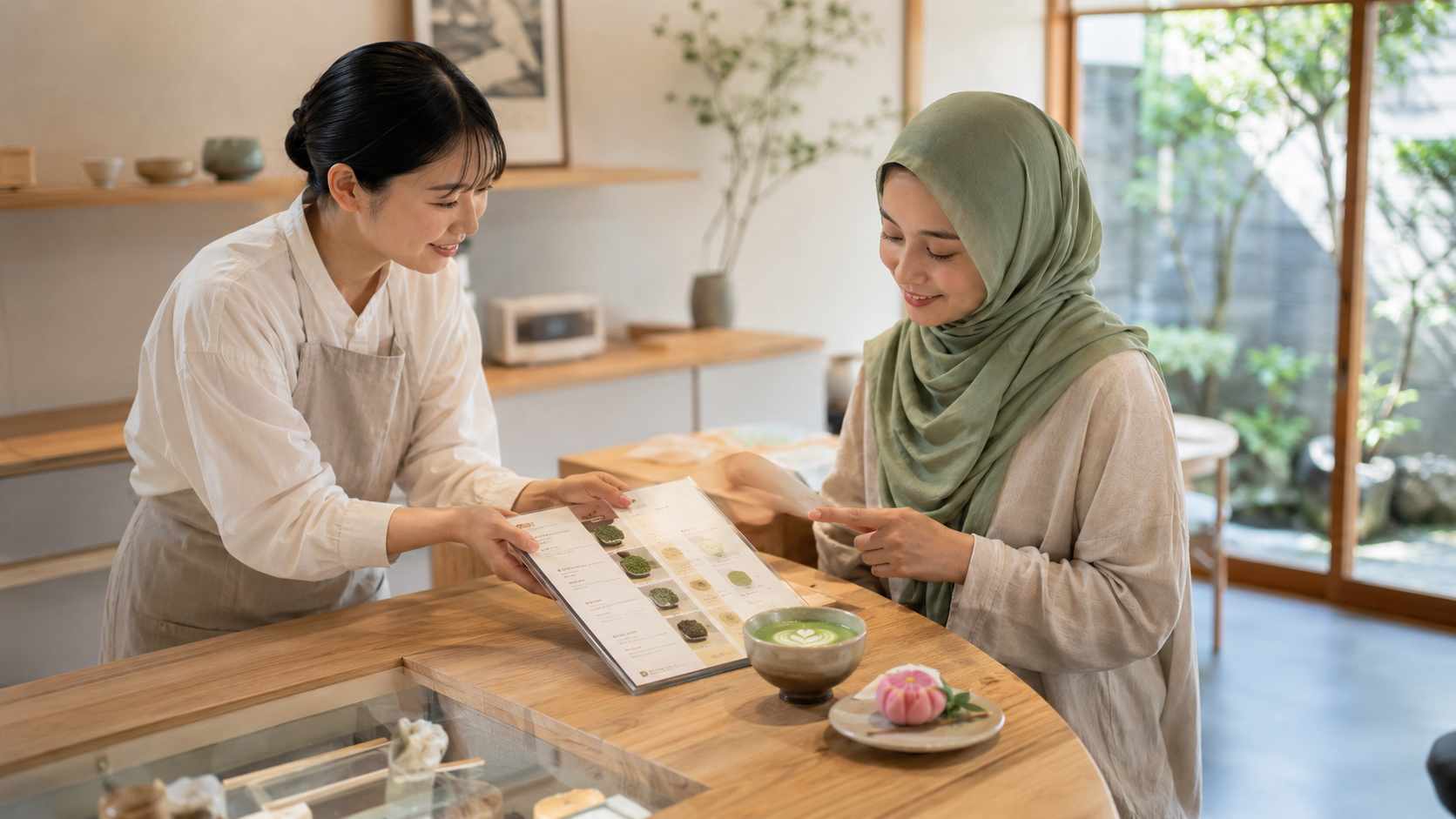
Japanese cafés overflow with matcha lattes, parfaits, and cakes. Here’s a quick read on how safe each tends to be.
Usually safe
- Plain matcha (whisked) — just leaves, no problem.
- A simple matcha latte — matcha with milk or soy milk is generally fine; just check syrups and toppings.
- Anko (red-bean) sweets — mostly red bean, sugar, and agar, so usually plant-based.
Worth checking
- Matcha jelly, mousse, or pudding made with gelatin
- Matcha cake, tiramisu, or chocolate with liqueur
- Cream or custard toppings (check emulsifiers and flavourings)
Quick tip: Before ordering, just ask — “Does this contain alcohol or pork-derived ingredients?” Staff are usually happy to read the label for you.
🍡 Choosing wagashi
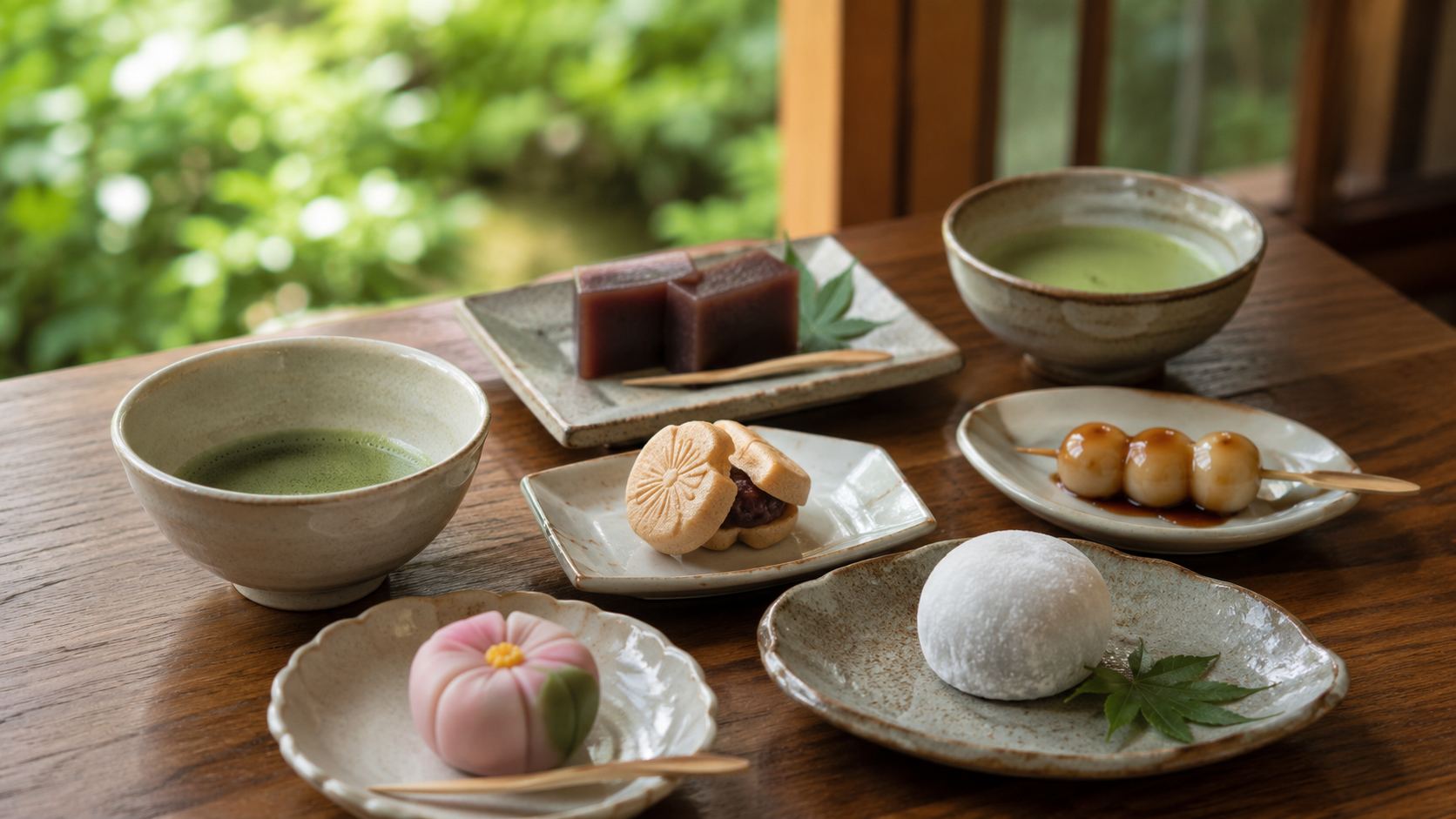
Here’s the good news: traditional wagashi are built from simple, mostly plant-based ingredients — red bean, sugar, mochi, and agar. Dango, daifuku, monaka, yokan, and nerikiri are classic examples, and they’re often halal-friendly.
Still, don’t assume — a few things to confirm:
- Yokan & jellies — some use gelatin instead of agar.
- Baked or western-style wagashi — watch for butter, shortening, and flavourings.
- Fresh sweets — ingredients aren’t always listed, so ask in the shop.
Some long-established shops publish full ingredient lists online, so you can check before you go. There are also halal-certified Japanese sweets now — castella, kibidango, and certain yokan — which make great gifts.
🍵 The tea ceremony
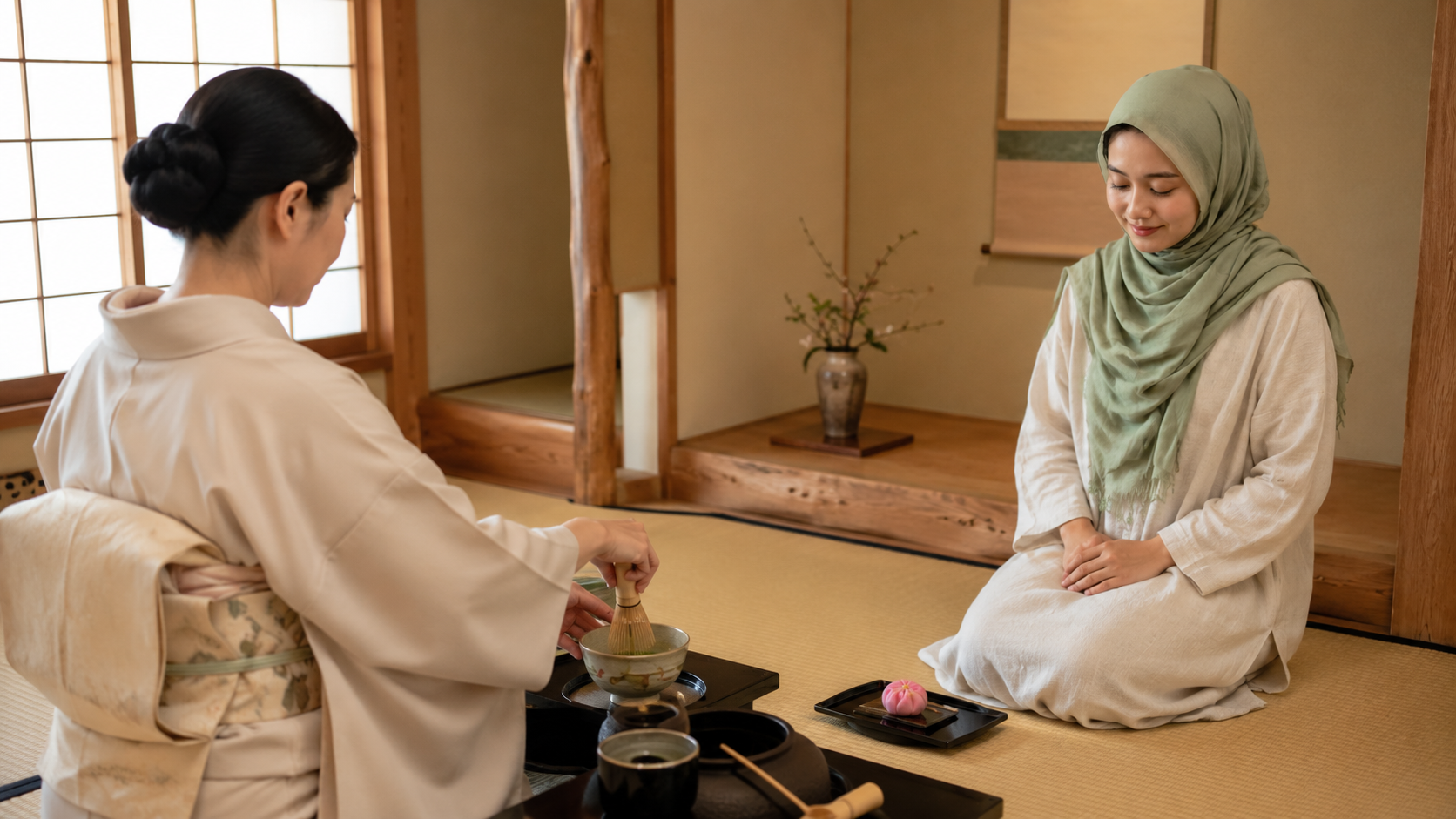
Whisking and sipping matcha in a still tea room is one of Japan’s most memorable experiences — and English-friendly sessions are easy to find, especially in Kyoto.
You’re served two things: matcha and a wagashi.
- The matcha — no problem.
- The sweet — usually a seasonal fresh sweet like nerikiri, mostly red bean, sugar, and agar, so generally fine. To be safe, mention when booking that you’d like a halal option and prefer to avoid alcohol and animal ingredients.
More and more studios happily accommodate Muslim guests if you ask ahead by email or the booking form — and some even let you whisk your own bowl and pair it with a sweet you shape yourself.
A quick checklist for the road
Handy to glance at while you travel:
- ✅ Scan the label for pork (豚 / ポーク), lard (ラード), alcohol (酒 / エタノール), mirin (みりん), and gelatin (ゼラチン).
- ✅ Look for a halal certification mark if you observe strictly.
- ✅ Ask in English — “No pork, no alcohol, please.”
- ✅ Pick less-processed options — plain matcha and simple anko sweets are the safest bets.
- ✅ Book ahead and mention your needs for tea ceremonies and restaurants.
- ✅ Use vegan labels as a clue — 100% plant-based is usually fine.
Great halal-friendly souvenirs
Whether for yourself or for family back home, there are plenty of halal-conscious matcha treats to bring back:
- Halal-certified matcha powder — whisk a proper bowl or make lattes at home.
- Halal-certified castella & kibidango — certified and made with Japanese ingredients; sometimes sold at airports and online.
- Yokan from shops that publish their ingredients — keeps well and travels well.
A few online shops gather halal-certified Japanese sweets in one place — worth a quick browse before you fly.
In short
Matcha is, at heart, just tea leaves — halal from the start. With a few simple checks, you can dive into Japan’s matcha culture without second-guessing every bite.
Three things to remember:
- Plain matcha is safe — watch what comes with it (alcohol, gelatin, animal ingredients).
- Wagashi are simple and often halal-friendly, but still check the ingredients.
- Go halal-certified when you’re strict, Muslim-friendly when you’re flexible.
A little prep, and the whole world of matcha opens up. So pick up that vivid green bowl, relax, and enjoy a truly Japanese moment — with total peace of mind.
*This article offers general guidance. Halal standards and personal limits vary by individual, school of thought, and certifying body. Always confirm the latest ingredients and accommodation details directly with each shop or maker before eating or buying.
