

Japan Train Guide ・ for Halal Travelers
Riding Japan’s Trains: An Easy Guide for First-Timers
So many lines, signs everywhere in Japanese — it can look overwhelming at first. But don’t worry. Once you understand how it works, Japan’s trains are wonderfully easy to use, and at tourist spots and major stations the signs come in several languages. From planning your route and buying a ticket to reading the signs and getting help when you’re stuck, here are the basics every first-time rider should know.
STOP
01
Japan’s train system at a glance
Japan’s railways fall into three broad groups. The good news: the way you ride is almost the same no matter which company runs the line.
In city centers these lines overlap like a web. It looks complicated at first, but once you use the colors and letter codes explained later as your guide, it becomes much easier to follow.
STOP
02
Before you go: check your route & times
In Japan, the smoothest approach is to look up your route on your phone before you set off.
Handy route-finder apps
Just enter your start and destination, and the app shows the train to take, transfers, travel time, fare, and even the arrival platform all at once. Many work in English, so they’re a great friend on your first trip.
- Google Maps Supports train route search and works in many languages.
- Japan Transit Planner / Navitime for Japan Travel Route apps made for visitors to Japan.
The app screen is also useful for showing staff where you want to go (more on that later).

Reading a station timetable
In the cities, trains come every few minutes, so you can usually hop on without worrying about the timetable. In the suburbs or countryside, though, trains are less frequent, so checking the times matters more.
A station or platform timetable lists, under each “hour,” the “minutes” when trains depart. For example, if the “9” row shows “05 · 18 · 32 · 47,” that means trains leave at 9:05, 9:18, 9:32, and 9:47.
STOP
03
Know the train types to avoid mistakes
On the same line, trains come in several types, and they stop at different stations. Board the wrong one and you might sail right past your stop. Here are the main types to remember.
▶ TIP
Before boarding a faster train, always check that it actually stops at your station. You can confirm the stops on the platform signs or in your app. When unsure, just take the Local — it stops everywhere, so you can’t miss your station.
STOP
04
Buying & using a ticket
Once you know your destination, it’s time for a ticket. You can buy one easily at the station’s ticket machine (jidō-kenbaiki).
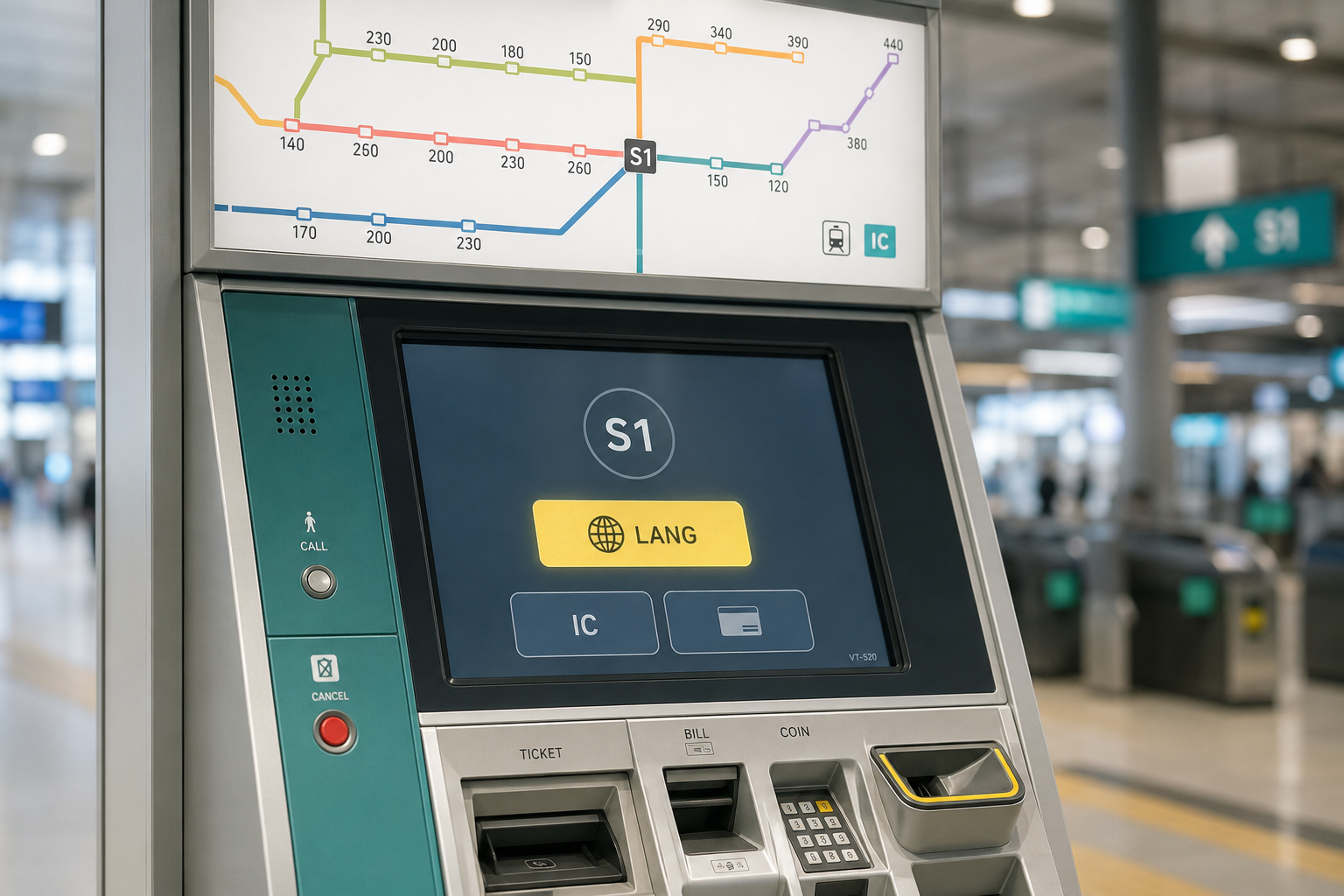
Buying a ticket, step by step
If you can’t work out the fare
Can’t find or read your destination on the fare map? No problem — just buy the cheapest ticket (the minimum fare) and board. If it isn’t enough when you arrive, pay the difference at the “Fare Adjustment” machine (seisanki) near the exit gates. The same trick works if you ride past your stop.
Going through the ticket gate
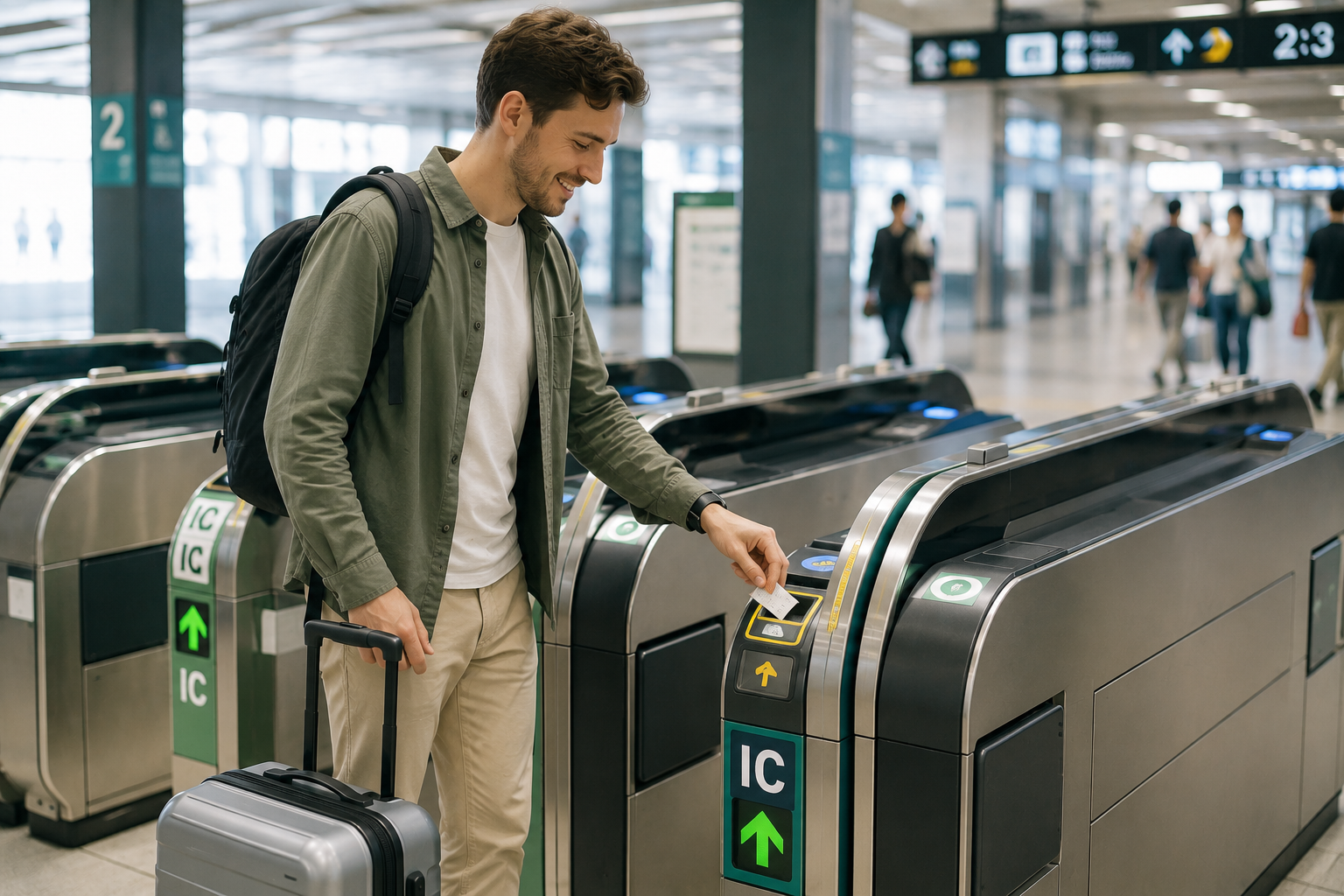
With your ticket, go through the automatic gate to the platform. Insert the ticket into the slot at the front and it pops out on the other side. Be sure to grab it as it comes out — you’ll need it again to exit at your destination, so don’t lose it.
There are two kinds of gates: ones with a slot for paper tickets, and IC-card-only gates (no slot — just an IC panel). You can’t insert a paper ticket into an IC-only gate, so when using a paper ticket, always choose a gate that takes tickets. If you can’t tell them apart, go through a gate near the staffed window to be safe.

▶ ABOUT IC CARDS
Instead of buying a ticket each time, there’s a handy option: a rechargeable IC card (like Suica or PASMO) that lets you through the gate with a simple tap. We cover it in detail in a separate article, so for now, just getting comfortable with paper tickets is plenty.
STOP
05
How to read the station signs
A little sign-reading know-how keeps you from getting lost. At Japanese stations — especially in cities and tourist areas — signs are often written in Japanese and English, plus Chinese and Korean, so they’re more helpful than they may look.
Tell lines apart by color and code
Each line has a line color and a letter code, and every station gets a number. For example, a sign like the one below —
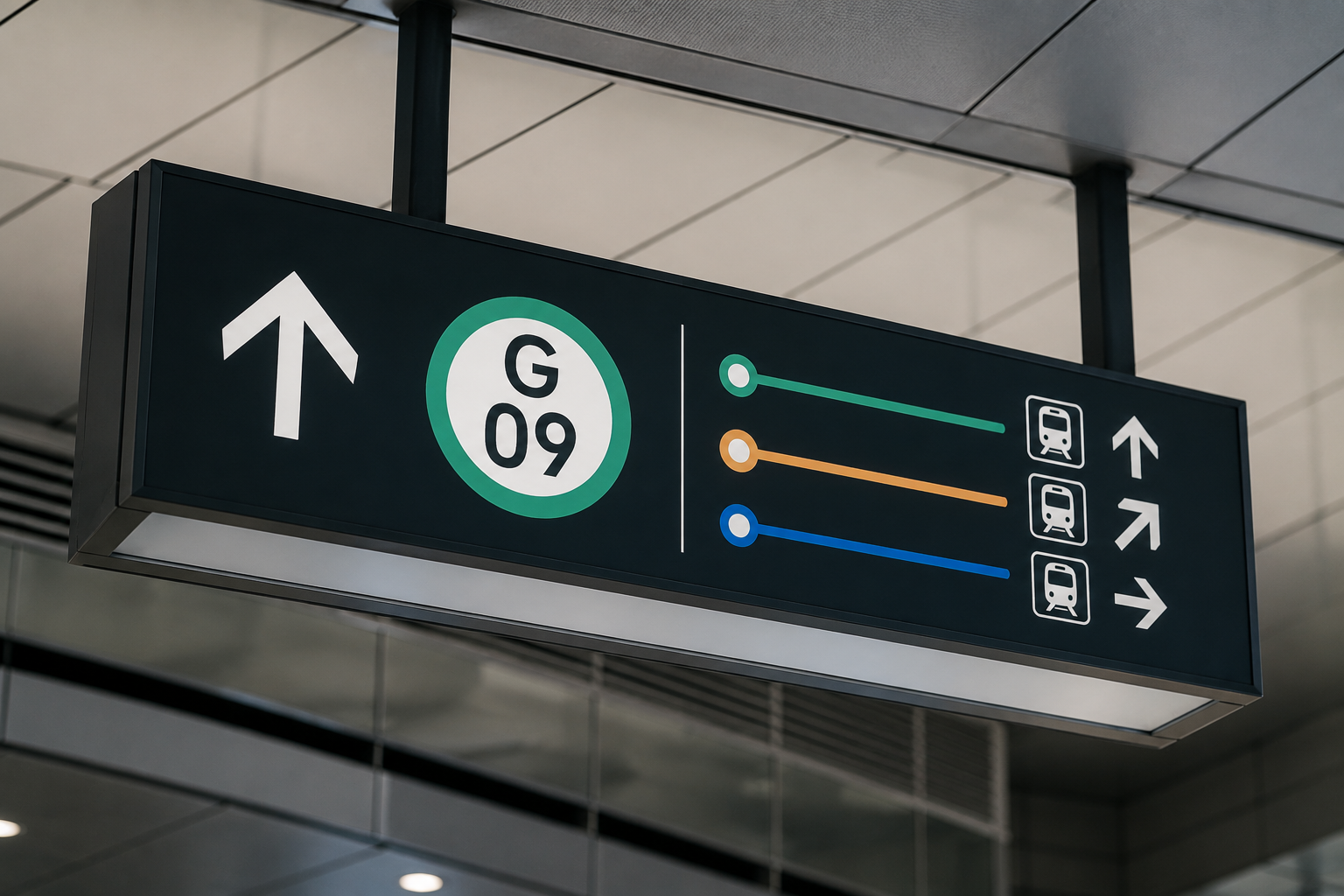
If you note the code and number of your destination from the app, you can follow the colors, codes, and arrows even if you can’t read the station name in Japanese.
Reading the electronic display board
The electronic boards above the platform or at the entrance mainly show:
- The departure time of the next train
- The train type (Local, Rapid, and so on)
- The destination (direction)
Note down your exit number
Big stations have many exits, and each exit has a number (e.g. Exit A3, East Exit). Look up the exit nearest to where you’re headed — a halal restaurant, mosque, hotel, and so on — and jot the number down in your app. It makes finding your way much easier once you’re back at street level.
STOP
06
When in doubt, ask the station staff
When things aren’t going smoothly, the surest move is to ask a member of staff. Station staff in Japan are very helpful, and they’ll often step in when they see a traveler looking lost.

Where to find the staff
- The window (madoguchi) right by the gates. At JR stations, the “Midori no Madoguchi” ticket office can help too.
- A staff member standing near the gates.
Tips when you’re unsure about the language
- Show your map or app screen — the surest way. Point to where you want to go and they’ll understand.
- Write the station name on paper and show it — that works fine too.
- Speak slowly, in short phrases.
▶ HANDY PHRASES
Say it, or just show the Japanese to the staff.
“I want to go to ___ Station.”
「___駅に行きたいです」___ eki ni ikitai desu
“Which platform for ___?”
「___へは何番ホームですか?」___ e wa nanban hōmu desu ka?
Useful words
~ ni ikitai desu I want to go to ~
Arigatou gozaimasu Thank you
STOP
07
A few simple manners for a smooth ride
None of these are difficult — just good to know so you can relax.

For Muslim travelers
Some major terminal stations and airports have prayer spaces (prayer rooms) you can use. It’s reassuring to have one before or after a long journey, so it’s worth checking for them alongside your route before you set off.
SUMMARY
With a little prep, train travel is nothing to fear
Punctual, clean, and able to take you almost anywhere, Japan’s trains make traveling so much more comfortable. Relax, enjoy the view from the window, and have a wonderful trip getting around Japan.
