
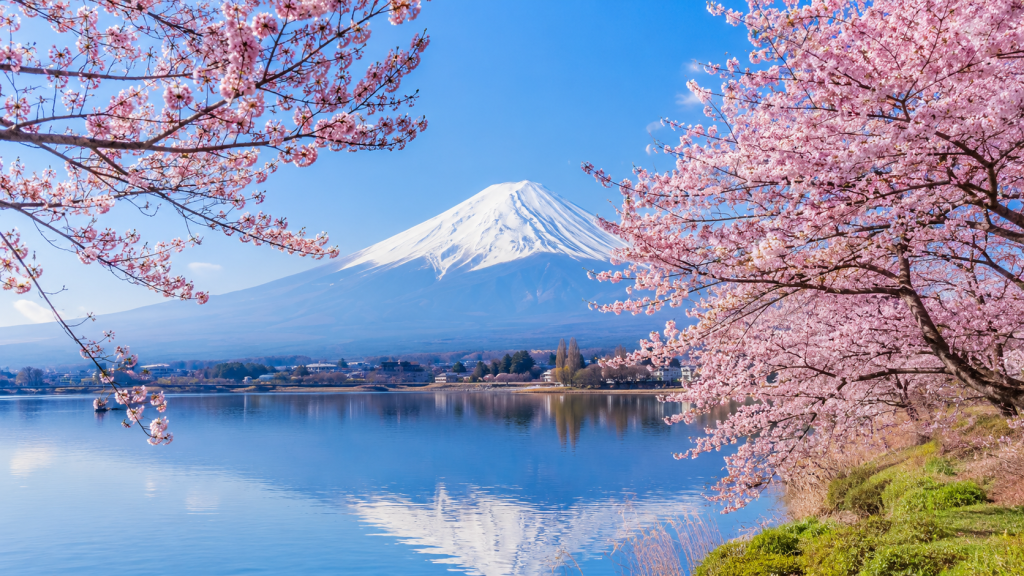
The soft pink of spring, the deep green of summer, the burning red of autumn, the quiet white of winter — each one leaves a lasting mark on everyone who visits.
And here is the good news: you can take in all of this beauty without setting your faith aside. For every season you’ll find “where to see the same view” plus a practical tip to help Muslim travelers feel at ease. Welcome to a year in Japan, told in pictures.
🕌 How to use this guide
- The boxes marked with the 🕌 symbol share season-by-season notes on prayer, food, and dress that are useful for Muslim visitors.
- At the very end you’ll also find a “before you go” set of practical notes to keep handy.
SPRING — 春
Cherry Blossom Season
📍 Where to see this view
- Lake Kawaguchi (Yamanashi) — the classic spot to catch Mt. Fuji, cherry blossoms, and Fuji’s mirror image on the water all at once
- Arakurayama Sengen Park (Yamanashi) — a world-famous view layering a five-storied pagoda, blossoms, and Mt. Fuji
- The Fuji Five Lakes — from Lake Motosu to Lake Shoji, each lake frames Fuji a little differently
Cherry blossoms bloom for just a handful of days, then drift gently to the ground. That very fleetingness is what makes spring in Japan so beloved. In the parks you’ll see hanami — people spreading out mats beneath the trees to picnic among the petals.
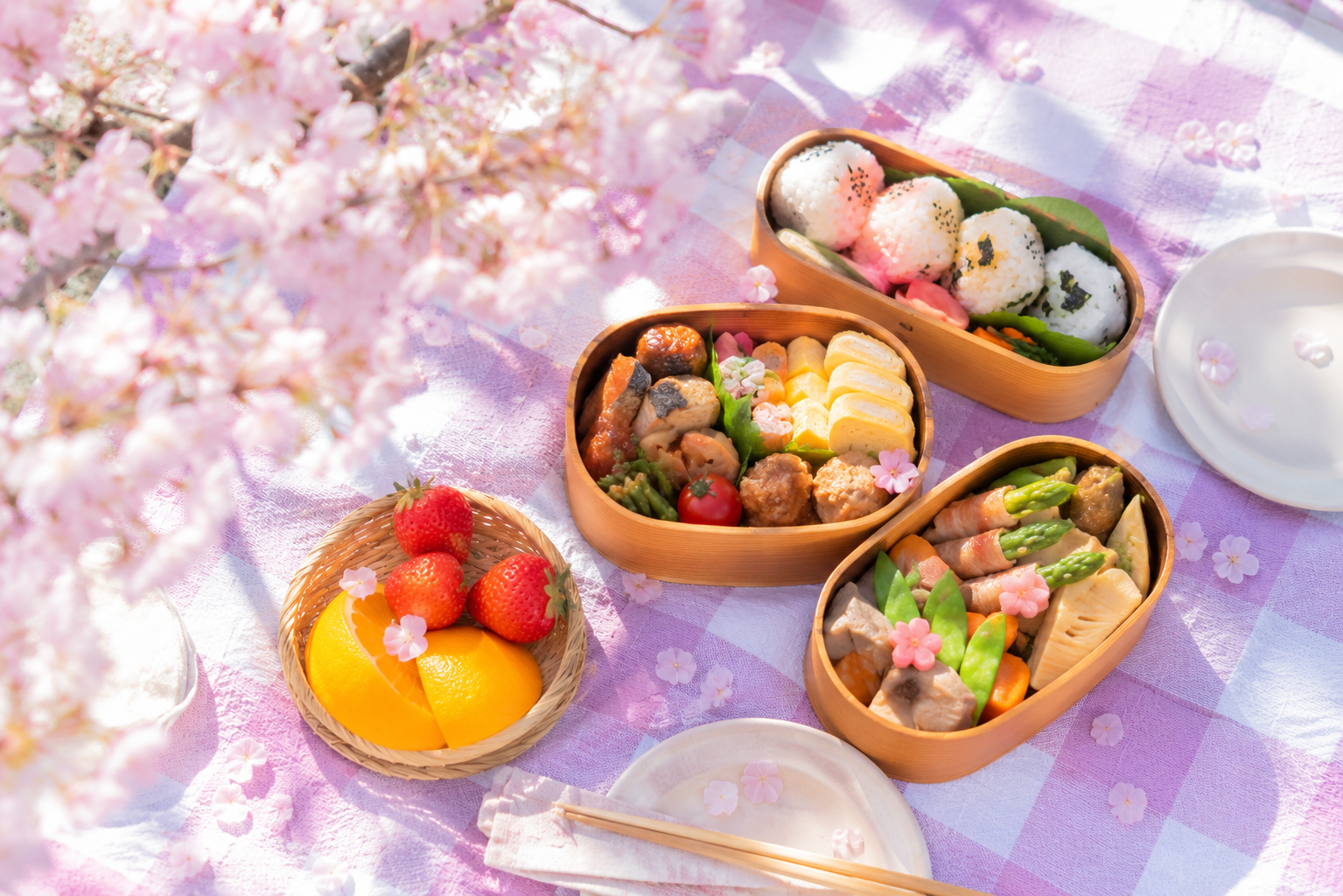
A taste of spring, homemade and enjoyed under a clear sky.
📍 Great places for hanami
- Shinjuku Gyoen (Tokyo) — relaxed flower-viewing on wide lawns; alcohol is not permitted inside, so it stays calm and quiet
- Ueno Park (Tokyo) — a lively tunnel of cherry trees, easy to reach from the city center
- Osaka Castle Park (Osaka) — around 3,000 cherry trees blooming against the castle keep
🕌 A tip for Muslim travelers
- Bringing your own homemade bento and fresh fruit makes hanami easy and worry-free. For store-bought items, check the label for mirin and cooking sake (alcohol/shusei).
- The spacious parks also make it easier to step away from the crowds and find a quiet place to pray. Alcohol-free grounds like Shinjuku Gyoen are especially peaceful.
SUMMER — 夏
Festivals and Deep Green
Summer in Japan is the season of festivals. The glow of paper lanterns, the beat of the drums, fireworks blooming across the night sky — every one of the senses comes alive.
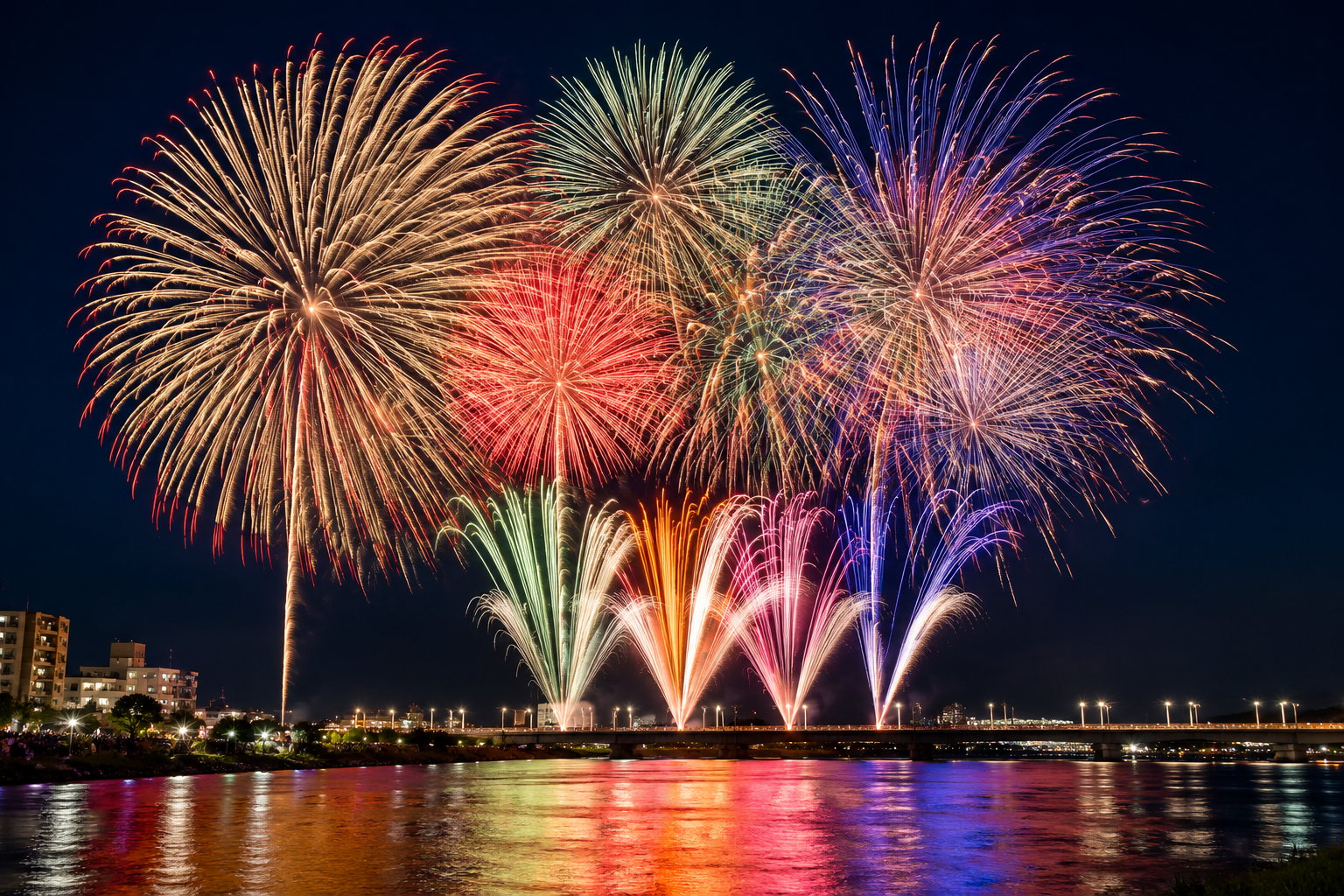
📍 Famous fireworks festivals
- Sumida River Fireworks (Tokyo) — a historic display lighting up the heart of the city
- Nagaoka Festival Fireworks (Niigata) — staged over the Shinano River on a breathtaking scale
- Omagari Fireworks (Akita) — the top competition where pyrotechnicians from across Japan show their craft
Slip into a yukata, and the festival’s star is you. Wrapped in light, cool cotton, an evening stroll becomes a memory you’ll keep.

📍 Streets and festivals made for a yukata stroll
- Gion, Kyoto (Gion Festival) — lanterns and traditional townhouses; the perfect summer backdrop for a yukata
- Asakusa (Tokyo) — an evening wander past Senso-ji Temple and the Nakamise shopping street
- The old town of Hida-Takayama (Gifu) — a stroll through streets full of old-Japan atmosphere
Leave the cities behind and you’ll find blue seas and clear mountain greenery. Cool, refreshing landscapes that make the heat melt away are waiting quietly for you.
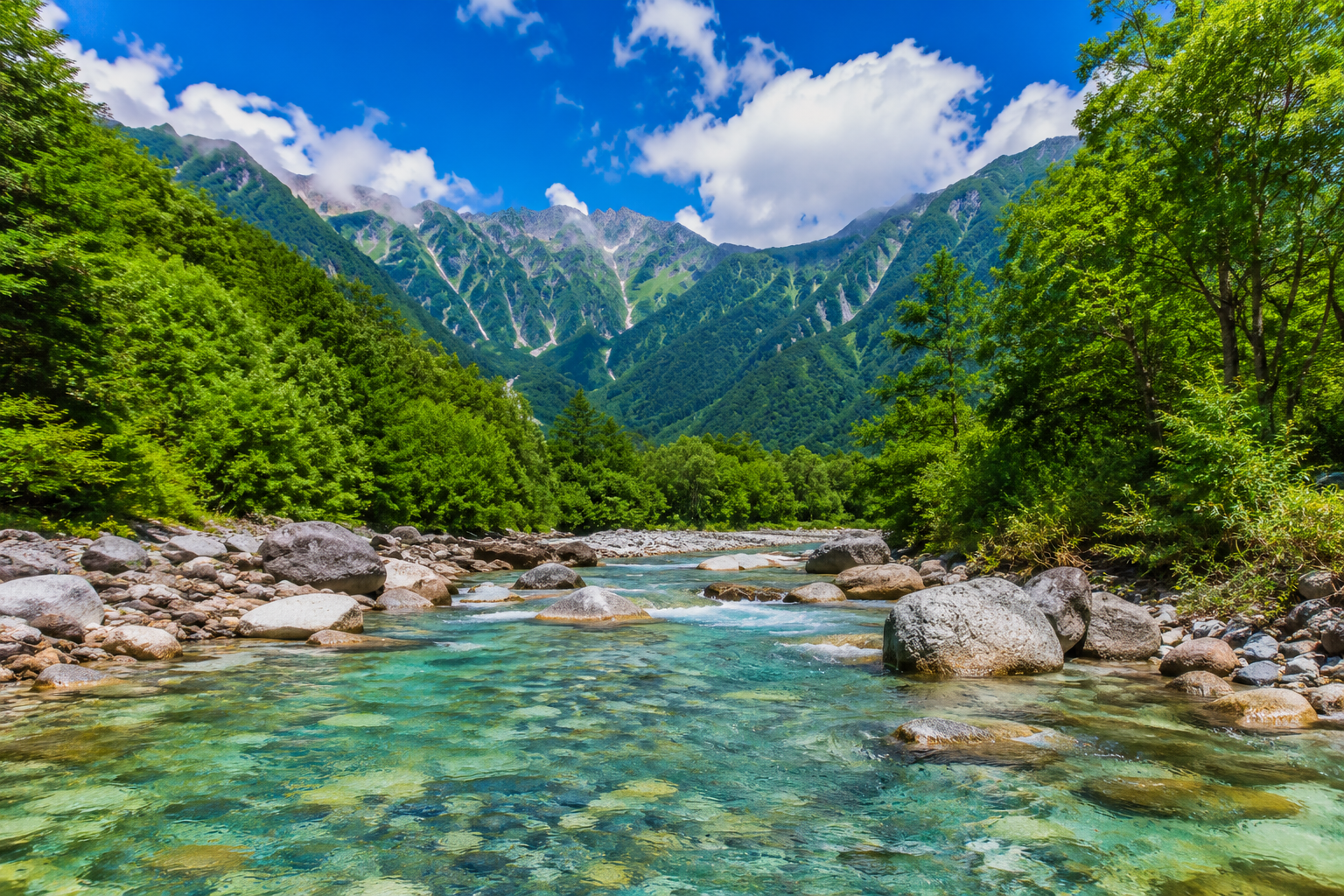
📍 Crystal-clear waterside scenery
- Kamikochi (Nagano) — the clear Azusa River and the Hotaka mountains; one of Japan’s finest highland landscapes
- Oirase Gorge (Aomori) — a walking trail beside moss-covered rocks and flowing water
- Kurobe Gorge (Toyama) — a majestic ravine explored by little open-air trolley train
🕌 A tip for Muslim travelers
- Festival stall food may contain pork, mirin, or cooking sake. Choices with clear, simple ingredients are safest — think grilled corn, candied apples, shaved ice, and cut fruit.
- For yukata rentals, look for shops with women-only or private changing rooms. Picking colors and patterns that pair well with a hijab can be part of the fun.
- For fireworks, choose a viewing area that allows you to bring your own food and drink, so you can relax with a meal you’ve prepared yourself.
AUTUMN — 秋
Dressed in Autumn Color
Slowly, summer’s green turns to red and gold. When old temples and Japanese gardens are wrapped in autumn leaves, this may be the most picture-perfect season of the whole year.
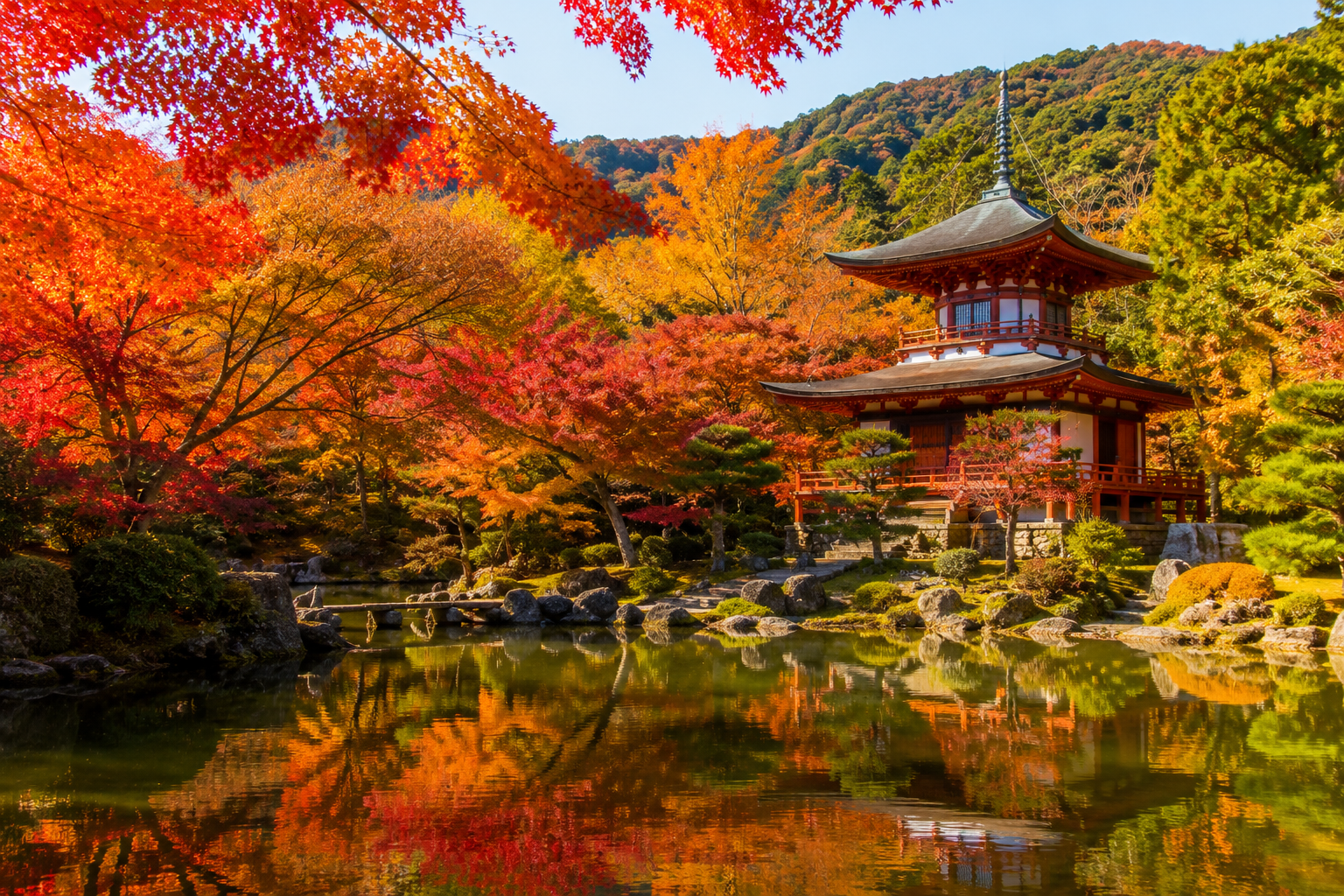
📍 Best spots for autumn leaves (temples & gardens)
- Kyoto (Tofuku-ji, Eikan-do & more) — temples and foliage together create Japan’s finest autumn scenery
- Nikko (Tochigi) — shrines, temples, and gorge foliage, plus the views from the Irohazaka road
- Korankei (Aichi) — a valley colored by some 4,000 maple trees
Walk through a quiet garden and watch the colors mirrored in the pond. Simply walking and looking is enough to feel content — that is the quiet luxury of autumn.
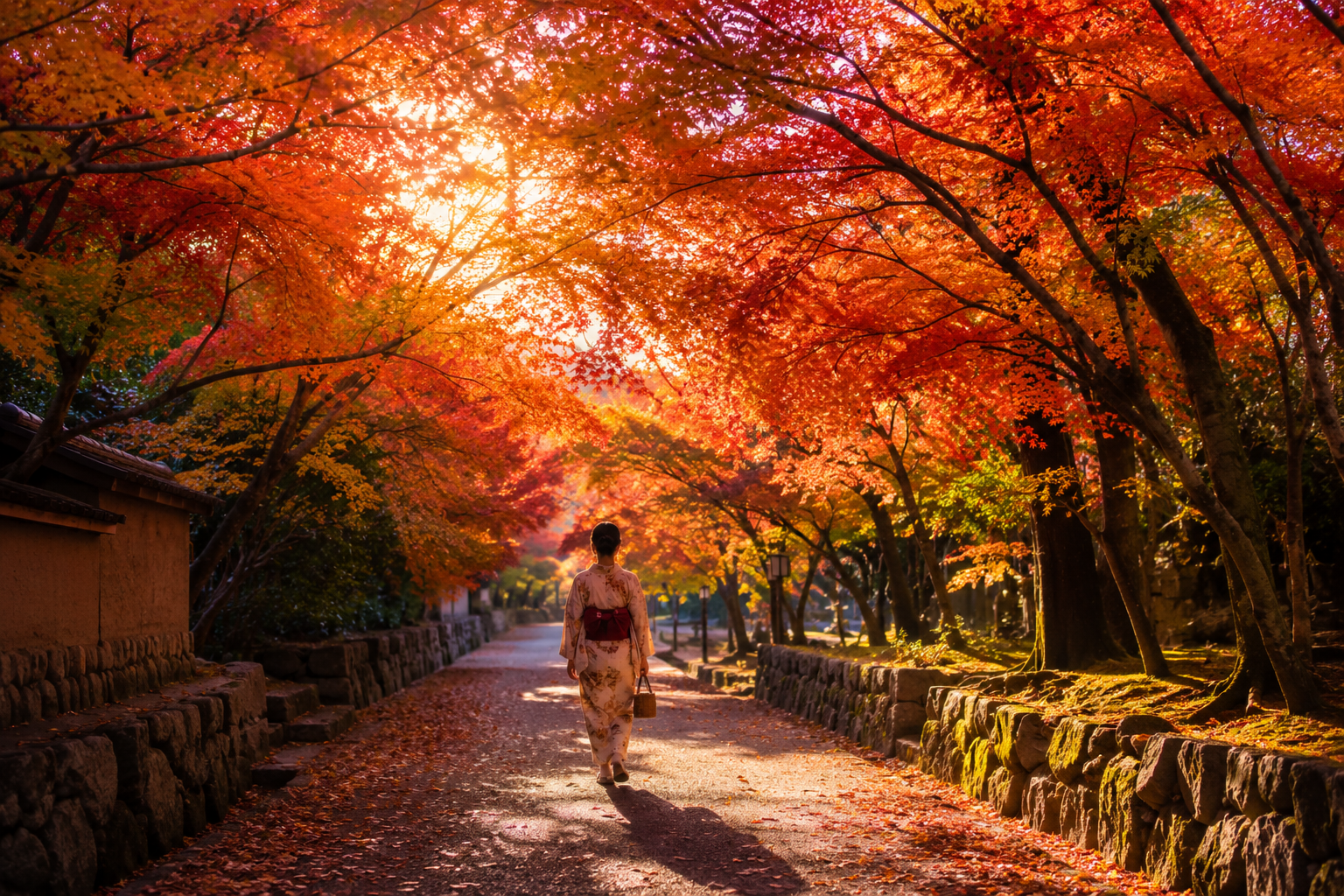
📍 Tunnels and avenues of autumn leaves
- Arashiyama, Kyoto — foliage around the Togetsukyo Bridge, the bamboo grove, and the temple paths
- Keisoku-ji (former Hanpuku-ji, Shiga) — a path carpeted with fallen maple leaves
- Minoo Park (Osaka) — the trail to the waterfall becomes a tunnel of color
Autumn is also the harvest. Chestnuts, sweet potatoes, persimmons — nature’s own sweetness arrives at the table. A simple season for savoring ingredients just as they are.
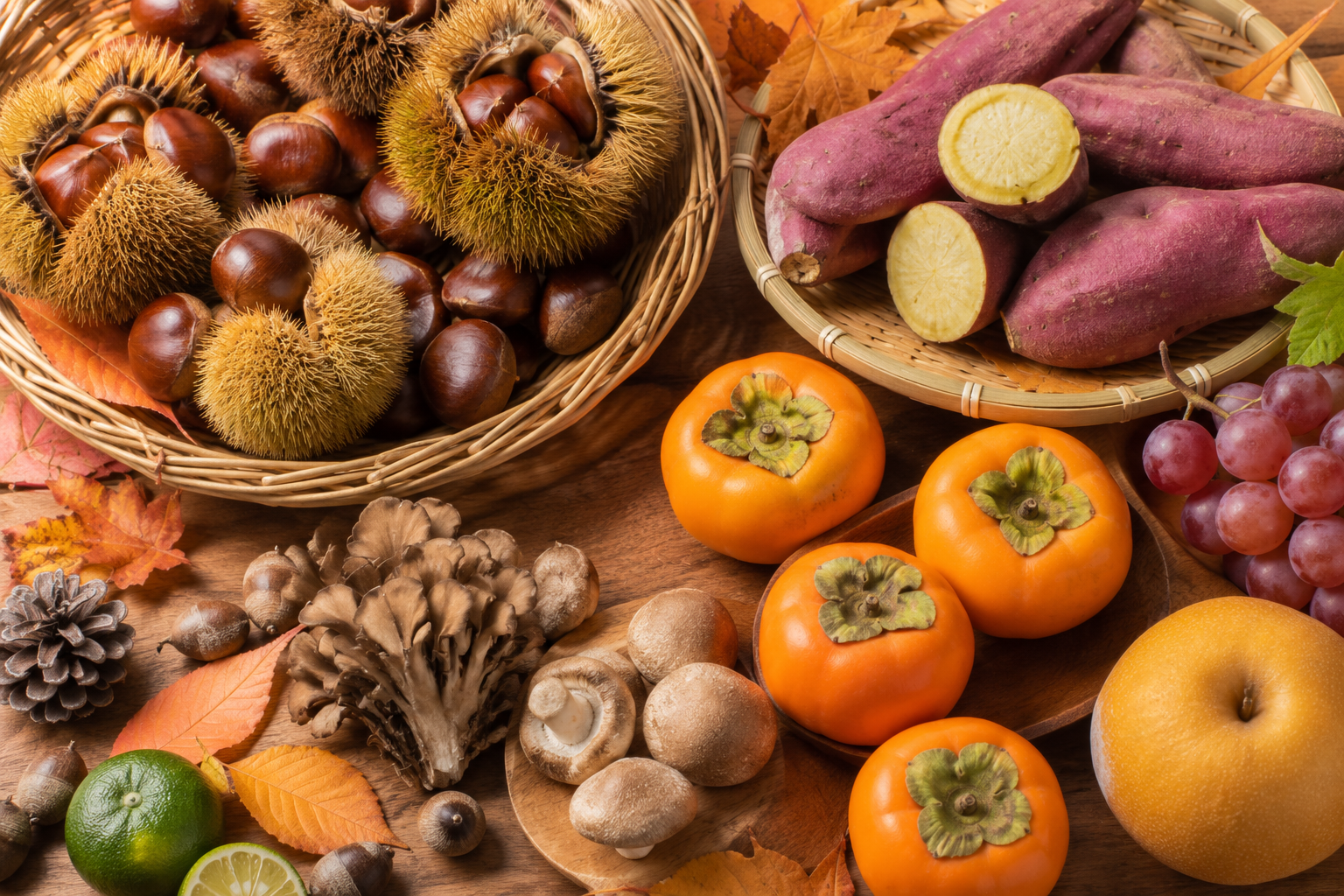
📍 Where to enjoy autumn flavors (fruit-picking)
- Yamanashi (Kofu Basin) — a fruit kingdom known for grape, peach, and persimmon picking
- Kawagoe (Saitama) — famous for sweet potatoes, with plenty of sweet-potato treats
- Tamba-Sasayama (Hyogo) — known for large “Tamba chestnuts” and black soybeans
🕌 A tip for Muslim travelers
- Leaf-viewing is a pleasure of simply looking and walking — a season to enjoy that doesn’t depend on food at all. Temples and gardens are quiet, making them calm places to pause for prayer, too.
- Autumn flavors are wonderfully simple. Roasted sweet potato, chestnuts, persimmons, pears, and grapes are easy to choose, with clear ingredients you can trust.
- Fruit-picking lets you pick and eat right on the spot — a hands-on experience you can enjoy without worrying about ingredients.
WINTER — 冬
Snow, Light, and Rising Steam
A snowscape so quiet it seems to absorb every sound. Winter in Japan is full of a still, crystalline beauty.
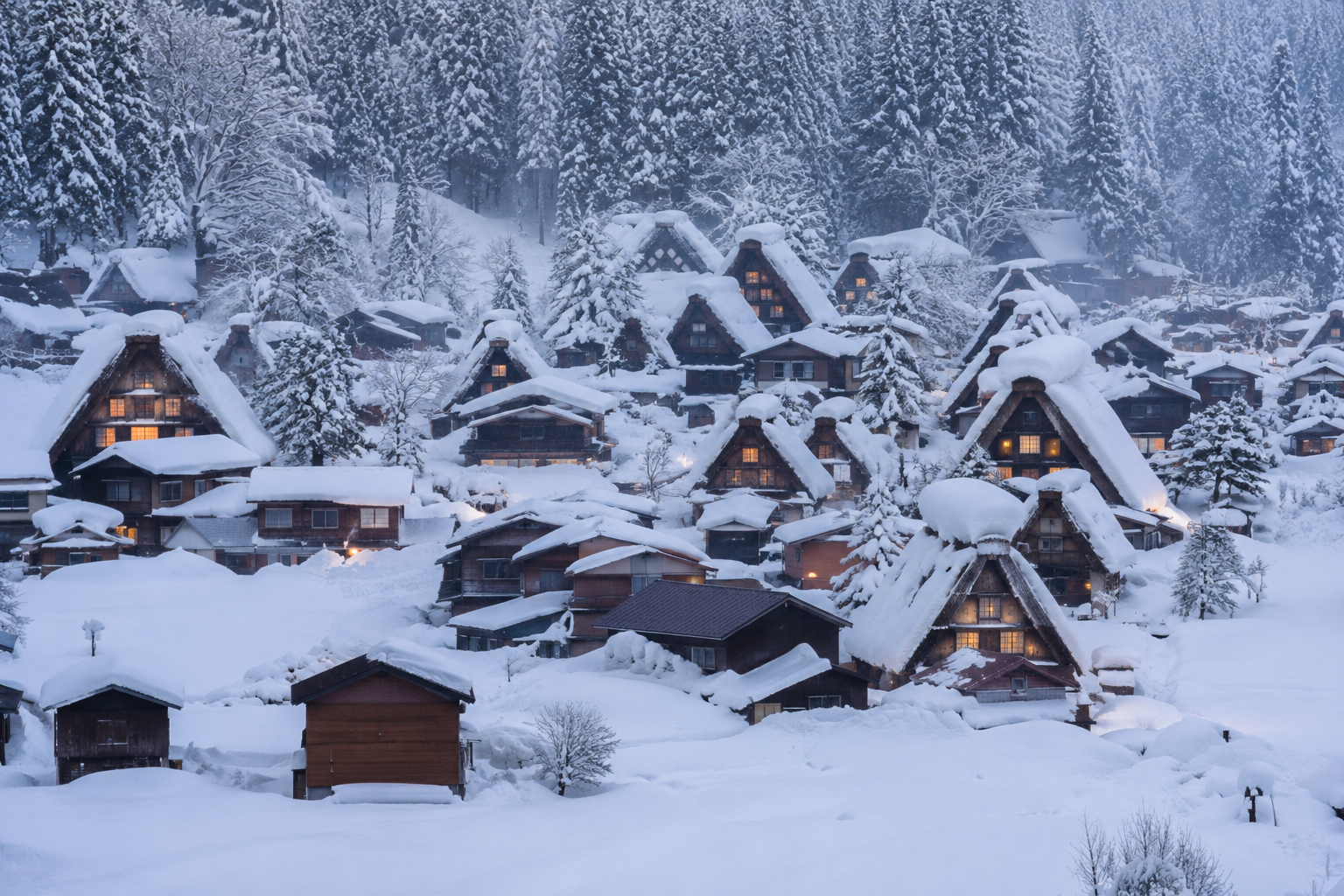
📍 Best spots for snowscapes
- Shirakawa-go (Gifu) — a World Heritage village of thatched gassho-zukuri houses blanketed in snow
- Gokayama (Toyama) — a quiet thatched-house village to rival Shirakawa-go
- Ginzan Onsen (Yamagata) — a nostalgic hot-spring town lit by gas lamps and snow
In the cities, illuminations color the night. Looking up at a sea of light, you forget the cold — a treat that belongs to winter alone.
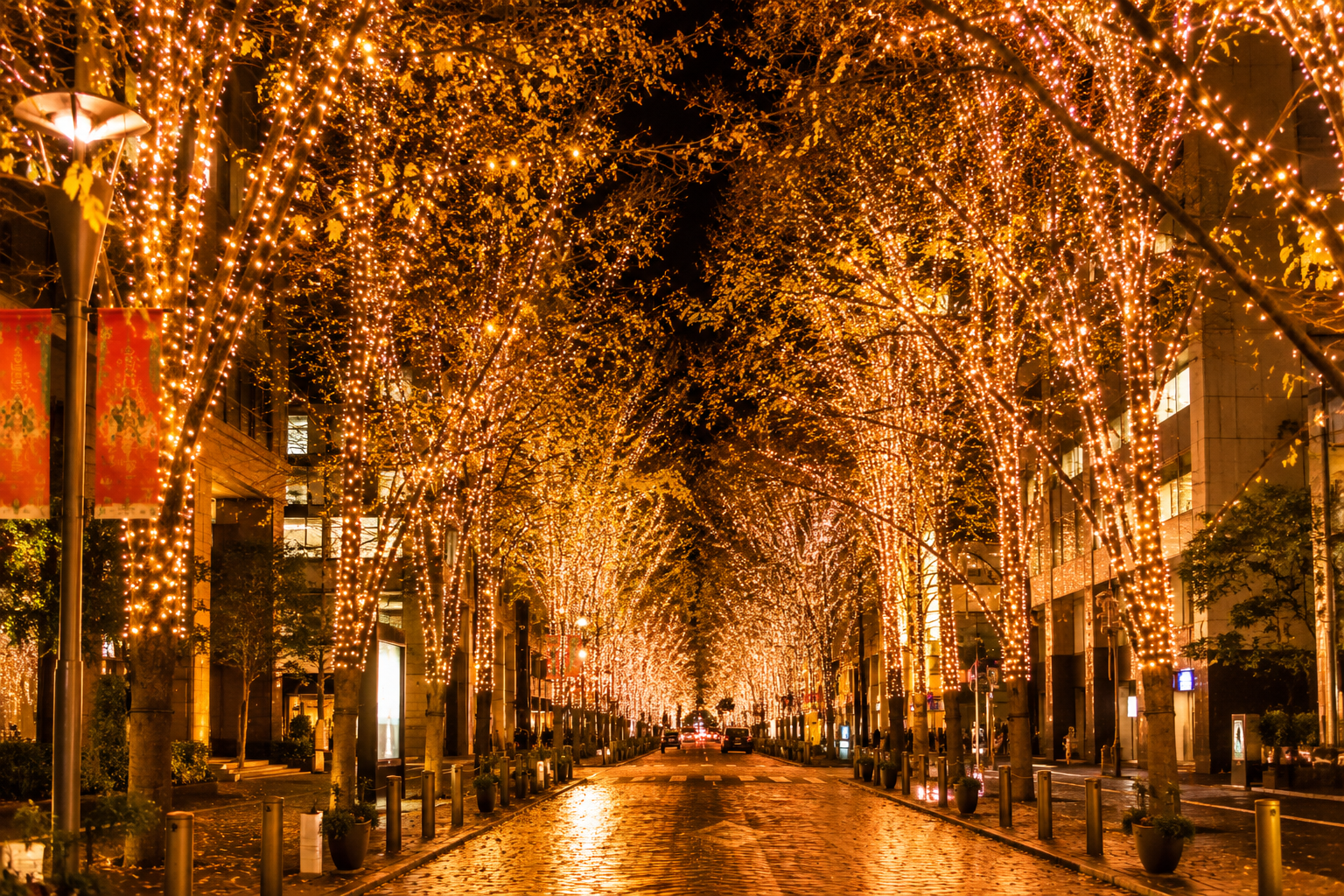
📍 Winter illuminations
- Marunouchi Naka-dori (Tokyo) — a tree-lined avenue glowing in champagne gold
- Kobe Luminarie (Hyogo) — a festival of light themed on remembrance and hope
- Nabana no Sato (Mie) — one of the largest illumination displays in the country
And then, soaking in a hot spring while watching the snow fall. It may be the most luxurious time of all that only a Japanese winter can offer.
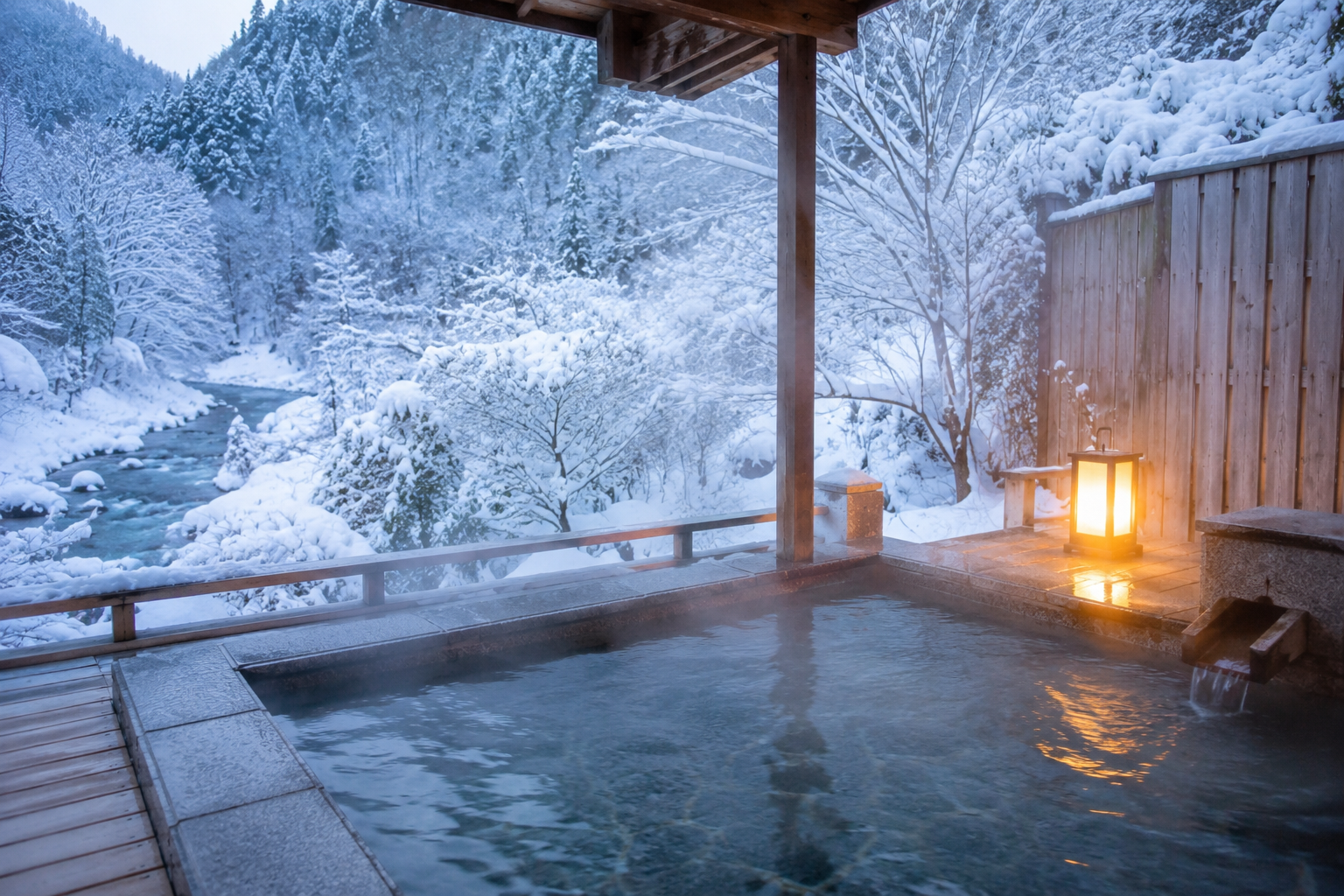
📍 Hot-spring towns with snow-view open-air baths
- Okuhida Onsen-go (Gifu) — abundant snow-view open-air baths, with many inns offering private baths
- Nyuto Onsen-go (Akita) — a secluded hot spring deep in the snow, ringed by beech forest
- Kusatsu Onsen (Gunma) — a celebrated spring with abundant water and many snow-view open-air inns
🕌 A tip for Muslim travelers
- For hot springs, choose a private bath (family bath), an in-room open-air bath, or a facility where swimwear is allowed, so you can relax with full privacy. Confirm the options when you book.
- Many illuminations are free to enjoy, so you can take them in without any food concerns at all.
- In the cold season, a portable prayer mat lets you pray comfortably in your room at the inn.
The seasons turn, and you’ll want to come back
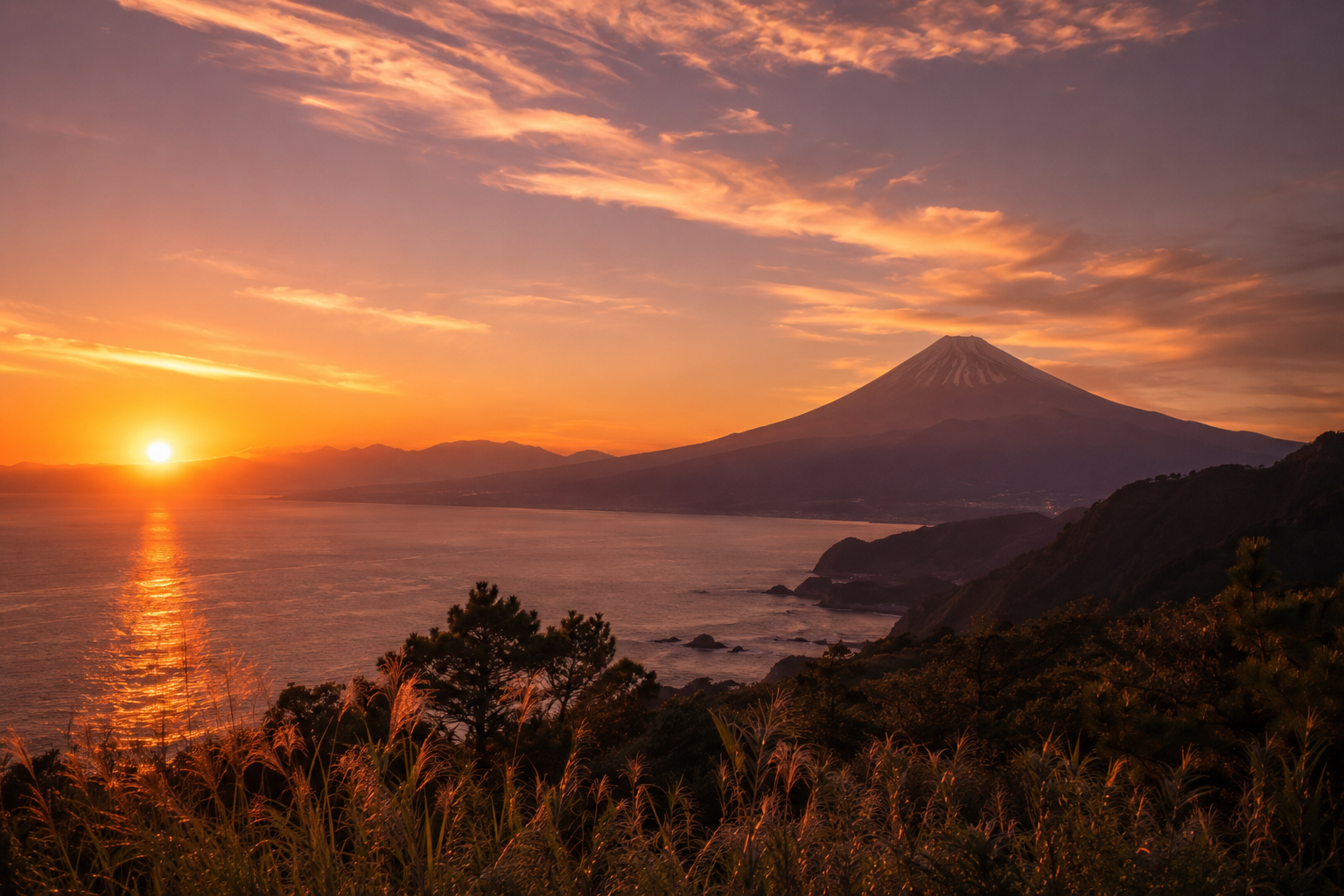
📍 Mt. Fuji at sunset, by the sea
- Nishi-Izu (Shizuoka) — the sun setting into the sea with Mt. Fuji’s silhouette beyond
- Miho no Matsubara (Shizuoka) — a World Heritage scenic spot framing Fuji through a pine grove
- Shonan Coast (Kanagawa) — Fuji’s silhouette floating above the sea at dusk
Cherry blossoms in spring, festivals in summer, foliage in autumn, snow in winter. The four seasons each wear a completely different face — and every one of them is waiting for you, as a journey you can enjoy with peace of mind, your prayers held close.
🕌 Before you go | A practical checklist for Muslim travelers
Food
- On ingredient labels, check for mirin, shusei (alcohol), gelatin, and shortening.
- When in doubt, choose items with clear, simple ingredients — fruit, roasted sweet potato, plain wagashi (Japanese sweets), and the like.
Prayer
- Bringing a portable prayer mat and a qibla-finder app lets you pray calmly outdoors or at your lodging.
- Prayer rooms are increasingly common at major stations, airports, and shopping complexes. Checking their locations against your itinerary in advance brings extra peace of mind.
Hot springs & dress
- For hot springs, choose private baths, family baths, or swimwear-friendly facilities, and confirm when you book.
- For yukata and kimono rentals, shops with women-only or private rooms let you enjoy the experience comfortably while keeping your hijab on.
So — which season will you come to meet next?
More reading to help you prepare
